
Porchetta: The Roast on the Cured Counter, and How to Buy It
Boned pork roasted with garlic, rosemary and fennel, then sold sliced cold. Why it follows different rules from every other salume, what the Ariccia IGP covers, and how to judge and use it.
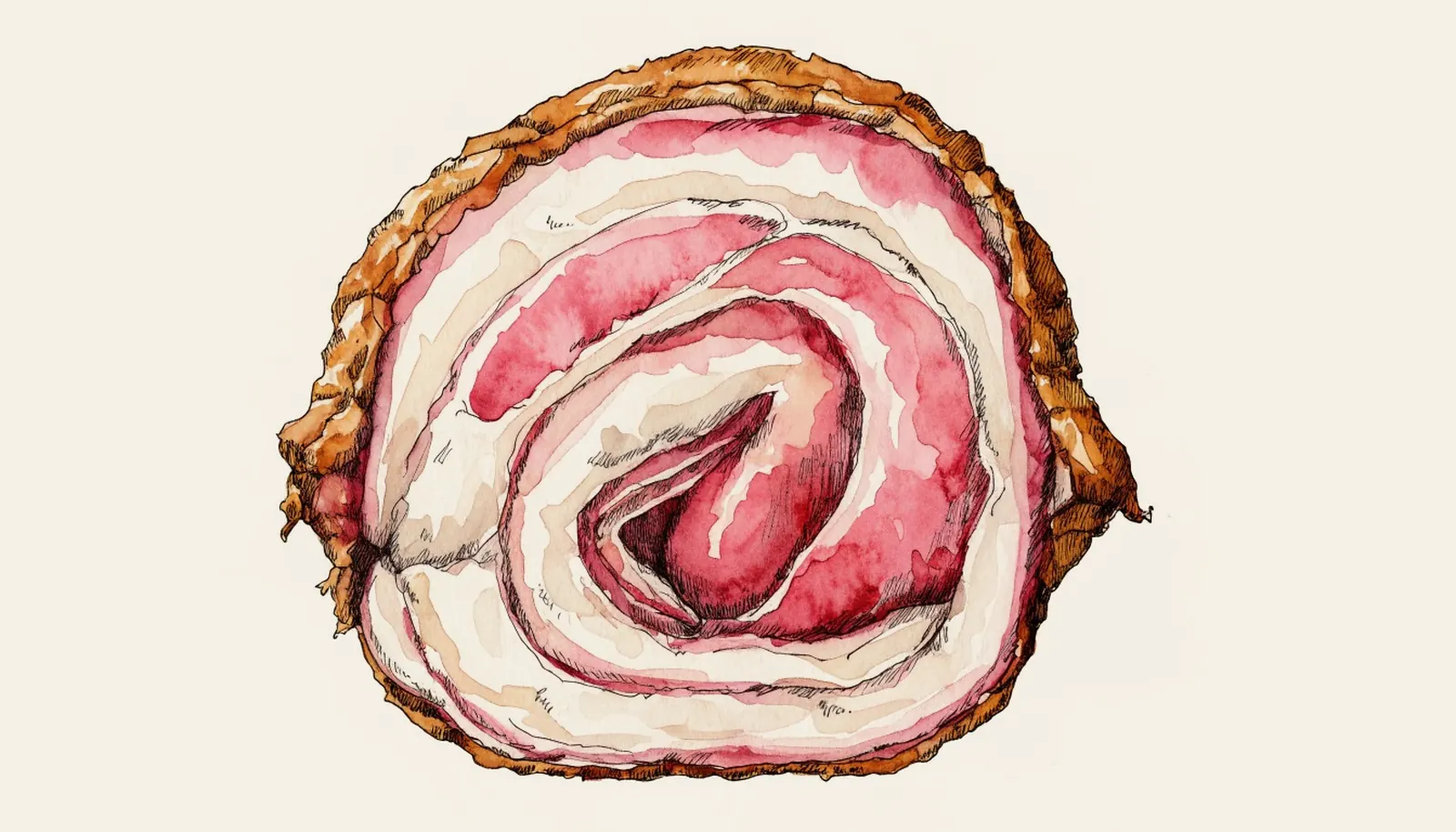
Porchetta is boned pork, seasoned heavily with garlic, rosemary, fennel and pepper, rolled in its own skin and slow-roasted, then sold sliced and eaten cold or at room temperature. It is one of the Italian foods worth buying from a good deli. It sits on the salumi counter alongside cured meats and it is not one.
That single fact governs everything practical about buying it: how long it keeps, what a fault looks like, and why a cheap one goes wrong in a way a cheap salami does not.
What porchetta actually is
Porchetta is a boned pig, or a boned cut from one, seasoned inside, rolled so the skin encloses the meat, tied and roasted slowly until the interior is tender and the skin is crisp.
The seasoning goes on the inside. The pork is opened out, salted and packed with garlic, rosemary, black pepper and fennel, then closed around it, so the flavour is distributed through the roll rather than sitting on a surface.
Wild fennel is the traditional aromatic in much of central Italy, stalks and pollen as well as seed, and it is what most distinguishes porchetta from an ordinary roast pork. Wild fennel seasons finocchiona as well.
The skin is structural, not decorative. It holds the roll together during a long roast and becomes the crackling that is half the point of the product.
It is cooked, not cured. No salt cure preserves it, no drying period concentrates it, and no mould culture works on it. Heat is the only process involved.
Whole-pig and cut-based versions both exist. The full boned pig is the traditional form; a belly wrapped around a loin is the common form outside Italy and in many restaurants.
Why it follows different rules from every other salume
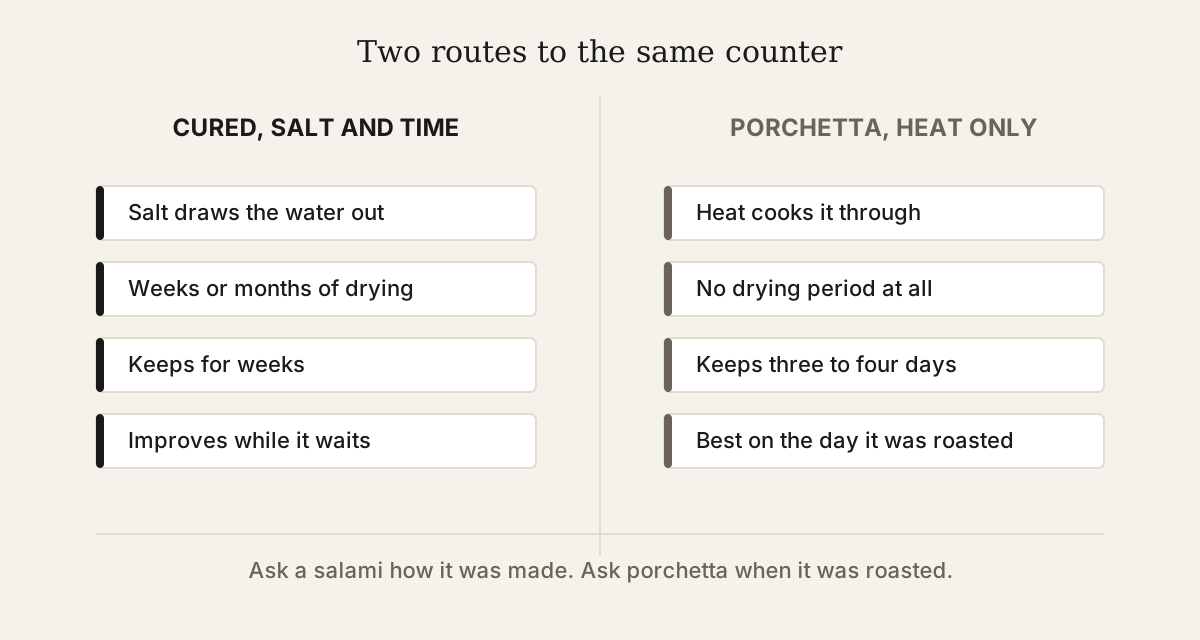
Porchetta is sold beside prosciutto and salami and behaves like neither, because roasting and curing solve the preservation problem in opposite ways.
A cured salume is preserved by salt and water loss and can sit for weeks or months. It gets better, drier and more concentrated as it waits.
Porchetta is preserved by nothing. It is cooked meat, and cooked meat keeps for days.
So the buying question changes. With salami you ask how it was made and how long it aged. With porchetta you ask when it was roasted.
A cheap salami is usually a shortcut in method. A cheap porchetta is usually one that has been sitting, which is a different and more immediate problem.
Its faults are also different. Salumi faults are about drying and fermentation; porchetta faults are drying out under a heat lamp, soggy skin and reheated fat.
The Ariccia IGP
Porchetta di Ariccia IGP is the protected version, from Ariccia in the Castelli Romani south of Rome, and it defines one regional style rather than the category.
IGP requires at least one production stage in the named zone, so the roasting happens at Ariccia while the pigs may come from elsewhere. That is the standing scope of an IGP and it is a real guarantee of method and place of production.
The Ariccia style is garlic and rosemary led, with pepper, and it is the version most associated with the roadside stands and festivals of Lazio.
Central Italian styles differ mainly in the fennel. Umbrian, Marchigiana and Tuscan porchetta lean more heavily on wild fennel and less on rosemary. Neither is a deviation from the other.
Almost all porchetta sold in the United States carries no designation, including good product from Italian-American producers, so the mark is rarely the deciding factor here.
How to judge a piece
Judge it on the skin, then the fat layer, then the cut face.
The skin should be genuinely crisp, not leathery and not soft. Skin that bends without snapping has been steamed by its own moisture, usually from being wrapped while still warm.
There should be a clear fat layer under the skin that has partly rendered. A thick band of pale unrendered fat means it was roasted too fast or too cool.
The meat should be moist and pale, with visible seasoning through the roll. A grey, dry, stringy cut face means it has been held too long or reheated.
The roll should hold together when sliced. A slice that falls into separate pieces indicates it was cut before resting or that the roll was badly tied.
It should smell of fennel, garlic and roast pork. A stale fatty smell is rendered fat that has sat, and it is the most common fault in porchetta sold from a warmed display.
Buy it on a day it was roasted if the counter will tell you, which is a question worth asking and one that has no equivalent for salami.
What it should cost
Expect roughly 14 to 25 dollars a pound in the United States, below most cured whole-muscle salumi.
Porchetta is cheaper because it is quicker. There is no months-long cure, no weight loss to drying and no capital tied up in a hanging room, so the cost is labour and a long oven session rather than time.
Checked on 13 August 2026, the first page of United States results for porchetta returned cooking publishers and method guides rather than sellers, which describes that search on that date rather than recommending any seller. Counting rule: a result counts as a seller when it offers finished porchetta for purchase. On that rule the first page carried none, which reflects that most Americans encounter porchetta as something to make rather than something to buy.
Italian delis and salumerie are the realistic retail route, along with the sandwich shops that have built menus around it.
How to use it
Eat it in a roll with nothing else. That is the traditional and the best use, and it is how it is sold from the vans in Lazio.
Bread, porchetta, some of the crackling, salt. Nothing green, no sauce, no cheese. The seasoning is already in the meat and additions blur it.
Room temperature is the target, not fridge-cold and not hot. Cold fat is waxy and mutes the fennel.
Reheat the skin separately if you are warming leftovers, under a hot grill for a moment, since reheating the whole slice dries the meat before the skin recovers.
Sliced thick rather than thin. Porchetta is not prosciutto and a paper-thin slice loses the contrast between meat, fat and crackling that is the point.
Storage
Refrigerated and wrapped, three to four days. That is the honest number and it is far shorter than anything else on the counter.
It is cooked meat and keeps like cooked meat. The salumi around it keep for weeks because they are cured; porchetta has no such protection and the comparison misleads people constantly. The cured side of that comparison is set out in the guide to how long Italian cured meat keeps.
Wrap it loosely or the skin softens completely. A paper wrap keeps it better than plastic for this reason, at some cost in drying.
It freezes acceptably for a month or two, with the skin sacrificed. Thaw in the refrigerator and use it in a cooked dish rather than on a board.
Discard it if the fat smells stale, which is the first fault to appear and appears before anything looks wrong.
Frequently asked questions
Is porchetta a cured meat?
Porchetta is a roasted meat rather than a cured one, which is why it sits on a salumi counter while following completely different rules. Nothing preserves it except cooking, so it keeps for three or four days refrigerated rather than the weeks a salami manages. The most common buying mistake is assuming its shelf life resembles that of the products beside it.
What is the difference between porchetta and pork roast?
Porchetta is distinguished by being boned, seasoned on the inside with garlic, rosemary, pepper and fennel, then rolled in its own skin and slow-roasted so the crackling encases the meat. An ordinary pork roast is seasoned on the surface and is not rolled in skin. The internal seasoning and the enclosing crackling are what make porchetta a defined product rather than a cooking method.
Does porchetta have a protected designation?
Porchetta di Ariccia holds an IGP, covering the garlic and rosemary style roasted in Ariccia south of Rome. The category as a whole is unprotected, and the fennel-led porchetta of Umbria, the Marche and Tuscany carries no mark despite being equally traditional. Effectively none of the porchetta sold in the United States carries a designation.
Should porchetta be eaten hot or cold?
Porchetta is best at room temperature, which is how it is sold from the roadside vans in Lazio and how the seasoning reads most clearly. Straight from the refrigerator the fat is waxy and mutes the fennel and garlic. Served hot it is perfectly good and becomes a roast dinner rather than the sandwich meat it is traditionally treated as.
Why is the skin on my porchetta soft?
Soft porchetta skin almost always means trapped steam, from the roll being wrapped or boxed while still warm so its own moisture softened the crackling. It can also mean the roast was finished too gently to drive the last water out of the skin. A short pass under a very hot grill restores it, and it is worth doing to the skin alone rather than to the whole slice.
CalItalia Food covers Italian ingredients: what they are, how to tell a good one from an ordinary one, and where to buy them in the United States.