
Finocchiona: The Tuscan Salami Seasoned With Fennel
Wild fennel seed in a coarse Tuscan salami, and the story about why. What the IGP controls, how to judge a slice, why it crumbles, and how to use it.
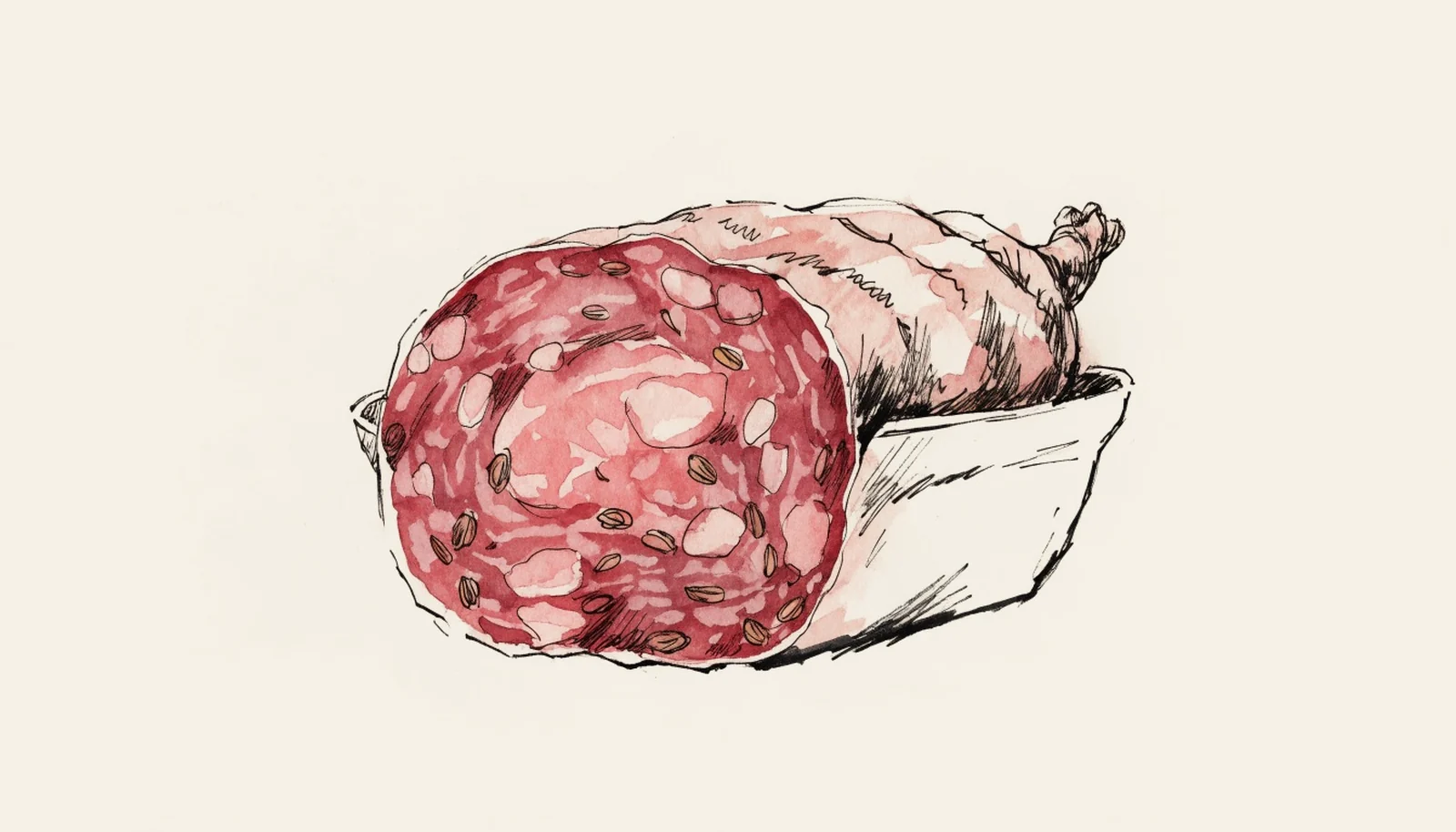
Finocchiona is a Tuscan pork salami seasoned with fennel seed and flowers, coarsely ground, and soft enough that a slice frequently crumbles rather than holding together. The fennel is not a garnish; it is the defining ingredient and it is present in quantity. That visible fennel is the first thing to check when telling a good Italian ingredient from an ordinary one.
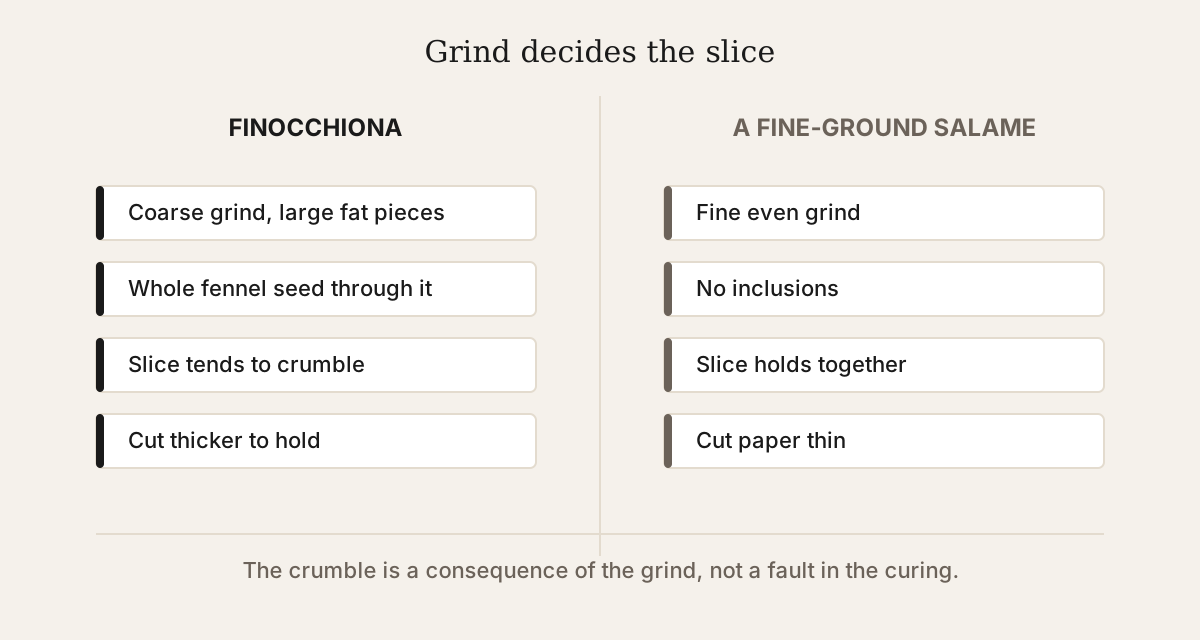
The crumbling is the thing people ask about most, and it is a property of the product rather than a fault.
What finocchiona actually is
Finocchiona is coarsely ground pork, salt, pepper, garlic and a generous quantity of fennel seed and sometimes fennel flowers, cased and cured for one to several months depending on size.
The fennel is the identity. It should be clearly visible in a slice as whole seeds and clearly present in the aroma. A salami where you have to hunt for the fennel is not finocchiona.
The grind is coarse and the fat is in large, distinct pieces rather than finely dispersed, which is why the texture is loose.
Garlic and often red wine are standard, and the balance between them varies by producer.
It is a soft salami. Finocchiona is not aged to the firmness of a Milano or a Felino, and a very hard finocchiona has been dried too far.
Sbriciolona
The softest, youngest version is sold as sbriciolona, from the verb meaning to crumble. It is the same product taken less far and is meant to fall apart. If your finocchiona crumbles badly you may simply have a young one, and that is a style rather than a defect.
The fennel story, handled honestly
The commonly repeated origin story is that a thief in medieval Tuscany hid inferior meat behind strong fennel, and that this is where the seasoning comes from.
It is a good story and it is not evidence. It appears in a great deal of English-language writing without a source and it should be read as folklore rather than history.
The plausible practical explanation is simpler: wild fennel grows abundantly across Tuscany, it was free, and it seasons and helps preserve. Regional salumi across Italy are seasoned with whatever grew locally and was cheap.
This site states the story as a story, because repeating it as fact is the kind of thing that gets copied onward and hardens into received knowledge.
What the IGP controls
Finocchiona IGP covers production in Tuscany, the permitted cuts and grind, the fennel requirement and the minimum ageing.
IGP rather than DOP means at least one production stage happens in Tuscany while the pork may come from elsewhere in the European Union, which is standard for this category.
Unmarked finocchiona is common and includes good domestic American product, which cannot carry the mark. Judge it on the visible fennel, the grind and the fat.
How to judge a slice
Look for visible fennel seed, then at the fat, then at the colour.
Fennel seed should be plainly visible and distributed through the slice. Ground fennel alone, with no whole seed, suggests a cheaper approach.
Fat should be white and in distinct pieces, not smeared. Smearing indicates the meat was too warm when ground and produces a greasy slice.
The lean should be deep red, with no grey ring at the edge.
Some crumbling is expected, particularly in a younger piece. A slice that shatters into dust has been over-dried.
Slice it thicker than prosciutto. Finocchiona needs a little body to hold together at all.
What it should cost
Expect roughly 20 to 35 dollars a pound in the United States, in the same band as capocollo and below the whole-muscle products.
Checked on 13 August 2026, the first page of United States results for finocchiona returned reference material alongside specialist charcuterie sellers and producers, which describes that search on that date rather than recommending any seller.
Domestic American finocchiona is widely made and is often excellent, since it is a straightforward salami to make well and the fennel is easy to source.
Pre-sliced is a poor buy here more than for firmer salami, because the coarse grind and soft texture mean pre-sliced finocchiona dries and separates quickly.
How to use it
Eat it as it comes, sliced by hand or on a low setting, at room temperature.
It suits bread and a young cheese, and it is the standard salami in a Tuscan crostini spread. The fennel makes it a good foil for something sweet, which is why it pairs with figs and with mostarda.
It is a poor cooking salami. The fennel dulls and the coarse fat renders out, so a dish wanting cured pork is better served by pancetta or guanciale.
Do not slice it too thin. A very thin slice of a soft coarse salami disintegrates on the board.
Storage
Whole and wrapped in paper, several weeks refrigerated. Once cut, wrap the face and use within about two weeks.
The soft texture means it dries at the cut face faster than a firm salami, so trimming a thin slice before the next use is normal.
A white bloom on the casing is the intended surface mould and can be left or wiped off. Fuzzy coloured growth should be trimmed hard.
It freezes poorly, drying and crumbling further on thawing.
Frequently asked questions
Why does my finocchiona crumble?
Because it is a soft, coarsely ground salami, and crumbling is characteristic rather than a fault. The youngest version is even sold as sbriciolona, from the verb meaning to crumble. Slicing it a little thicker helps it hold together. A slice that shatters into dust rather than breaking has been over-dried, which is a different problem.
Is the story about the thief true?
The thief story is repeated widely and presented without evidence, so this site treats it as folklore rather than history. The plausible practical explanation is that wild fennel grows abundantly in Tuscany, was free, and both seasons and helps preserve, which is how most regional salumi acquired their seasonings.
Is finocchiona spicy?
No, finocchiona is not spicy. It is seasoned with fennel, garlic, pepper and often wine, and it carries no chilli in its traditional form. The fennel gives a sweet aniseed character that some people find assertive, which is different from heat. A finocchiona with chilli has borrowed from a southern tradition.
What is sbriciolona?
The youngest and softest version of finocchiona, cured for less time and intended to crumble. The name comes from the verb meaning to crumble. It is a style rather than a defective batch, and it is eaten very fresh, often spread on bread rather than sliced neatly.
Does finocchiona have a DOP?
No, it carries Finocchiona IGP, which requires at least one production stage in Tuscany plus adherence to the recipe discipline while allowing the pork to come from elsewhere in the European Union. Much of what reaches a United States counter carries no mark at all, including good domestic product.
CalItalia Food covers Italian ingredients: what they are, how to tell a good one from an ordinary one, and where to buy them in the United States.