
Mocetta: The Alpine Cured Leg That Used to Be Wild Game
A lean, herb-cured meat from the Valle d Aosta, once made from chamois and now almost always beef or goat. What changed, how it differs from bresaola, and how to judge and use one.
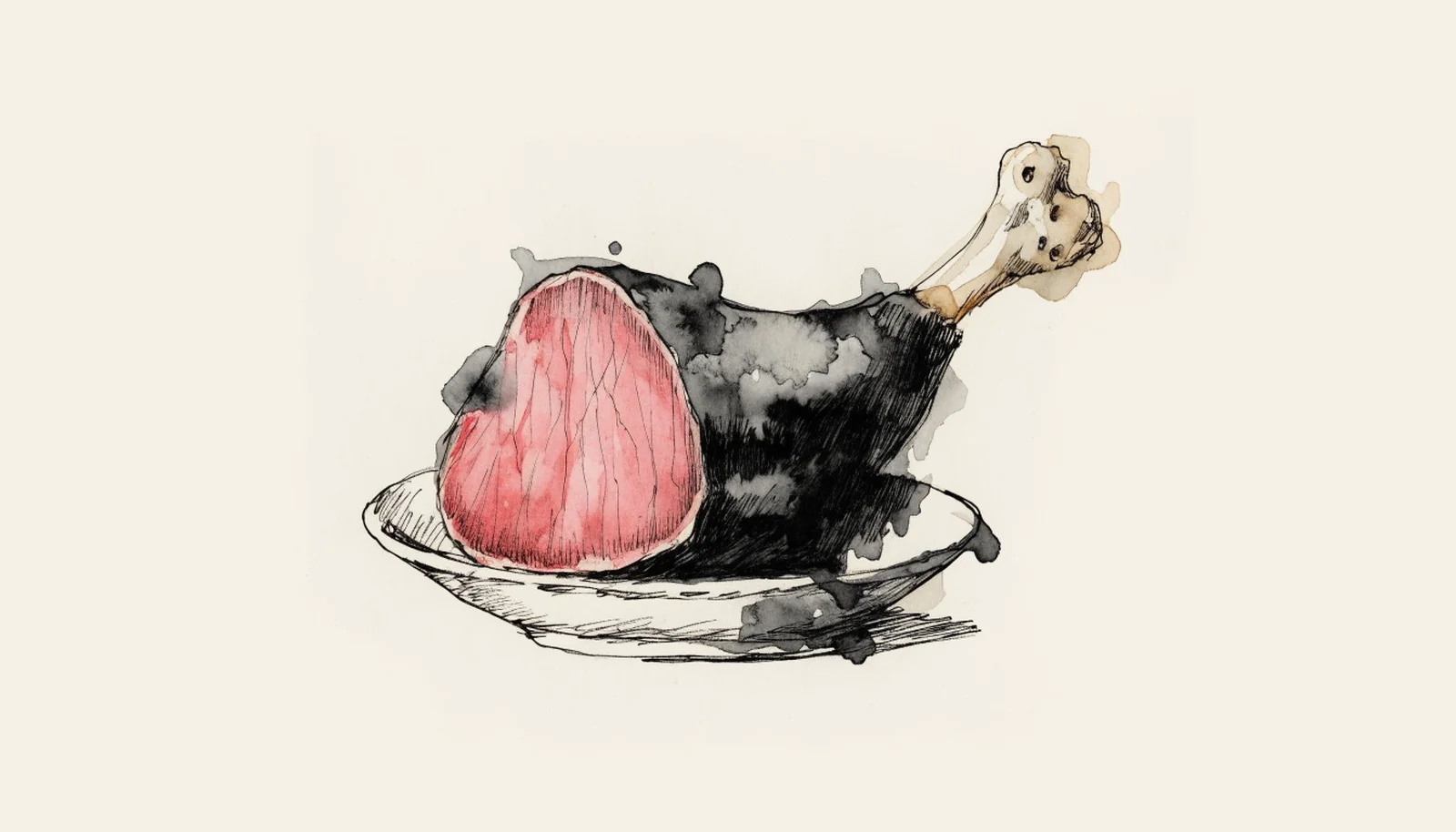
Mocetta is a lean cured meat from the Valle d’Aosta, salted with juniper, garlic, sage and mountain herbs and air-dried in the Alps, then sliced very thin. Knowing which animal it comes from is part of judging an Italian cured meat honestly. It was traditionally made from the leg of chamois or ibex. Almost all of it is now beef, goat or pork.
That substitution is not a modern corner-cut. It is the direct consequence of Alpine wildlife protection, and the product survived the change reasonably intact.
What mocetta actually is
Mocetta is a boned leg or large muscle, salted and packed with an aromatic mixture, left to take up the cure, then hung to dry in the cold dry air of the Aosta valley for several weeks to a few months.
The herb cure is the identity. Juniper is the constant, with garlic, sage, rosemary, bay and mountain herbs varying by producer. This is not a plain salt cure.
It is very lean. Whatever animal it comes from, the cut used carries little fat, so the finished meat is dense and dark.
It is sliced extremely thin, closer to bresaola than to a ham, and thick slices are tough.
The Alpine air does the drying. Cold, dry, low-pressure mountain conditions are the traditional curing environment and are part of why the product is local.
Motsetta is the local spelling. Valle d’Aosta is a francophone region and the Franco-Provençal form appears on labels and in references alongside the Italian one.
What changed, and why
Mocetta’s traditional source animals are now protected, and the product moved to farmed meat.
Chamois and ibex were the original. Both are Alpine wild ungulates and both were hunted in the valley.
The ibex nearly disappeared. Alpine ibex populations collapsed to a remnant in the Gran Paradiso area, and the protection that followed is the reason the species still exists.
Commercial production moved to farmed animals. Beef is now the most common source, with goat and pork also used.
Some game mocetta still exists where hunting is legal and regulated, and it is a local and occasional product rather than something exported.
The seasoning carried the identity across the change. Because mocetta was always defined by its juniper and herb cure as much as by its animal, the substitution damaged it less than it would have damaged a product defined by its species.
Read the label for the animal. Beef, goat and pork mocetta taste noticeably different, and the packaging does not always lead with it.
How it differs from bresaola
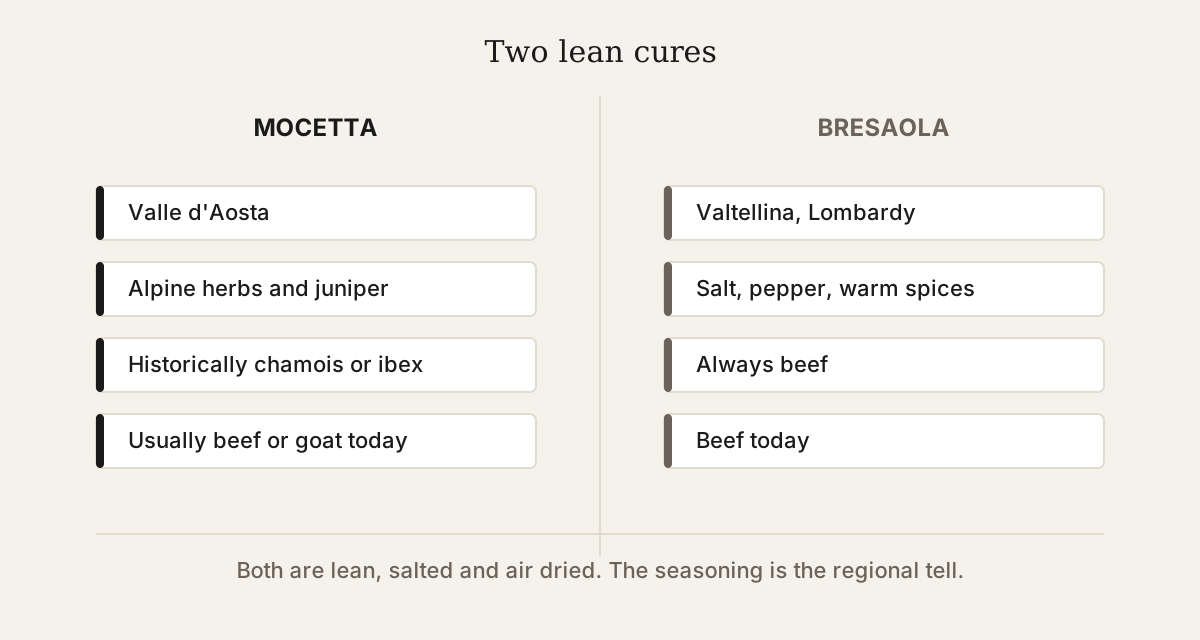
Mocetta and bresaola are both lean, dark, thinly sliced Alpine cured meats, and they are not the same product.
Bresaola is beef and is defined as such. Bresaola della Valtellina holds an IGP that specifies beef.
Mocetta’s animal varies and has changed historically, which no designation constrains.
Bresaola’s cure is comparatively plain, salt with modest seasoning. Mocetta’s is heavily aromatic with juniper leading.
Bresaola comes from Lombardy’s Valtellina; mocetta from the Valle d’Aosta, two different Alpine valleys.
Bresaola is dressed when served, conventionally with oil, lemon and pepper. Mocetta is usually served plain, because its own seasoning is already doing that work.
Bresaola is far easier to buy in the United States, and mocetta is genuinely scarce here.
Designation, and the absence of one
Mocetta carries no DOP and no IGP, despite the Valle d’Aosta holding protected designations for other products.
The valley’s protected meats are named individually. Valle d’Aosta Jambon de Bosses DOP and Valle d’Aosta Lard d’Arnad DOP both hold marks. Mocetta does not.
It is recognised as a traditional regional product, which records that it belongs to the valley without reserving the name or setting a specification.
So the name is open and the producer carries the judgement.
That matters more here than usual, because the source animal is unconstrained and is the single largest variable in what you will taste.
How to judge it
Judge it on colour, then on the aroma, then on how it slices.
The lean should be a deep red to near-purple, uniform, with no grey ring. Mocetta is naturally dark and a pale one has been cured too briefly.
It should smell of juniper first. If the herbs are not immediately apparent, the cure was thin or the meat is old.
There should be almost no visible fat, and what little appears should be white.
It should slice thin without crumbling. Crumbling means it has over-dried, which happens easily to a very lean muscle.
A hard dark rim indicates it dried too fast, which is a common fault in lean Alpine cures. The same fault turns up in violino di capra.
Checked on 13 August 2026, the first page of United States results for mocetta returned reference entries and an Italian food publisher rather than United States sellers, which describes that search on that date rather than recommending any seller. Counting rule: a result counts as a seller when it offers mocetta for purchase into the United States. On that rule the first page carried none.
What it should cost and whether you can get it
Expect roughly 35 to 55 dollars a pound where it can be found, and it usually cannot be found.
Mocetta is a small-scale mountain product with no protected designation to build an export market around, made in a region of about a hundred and twenty thousand people. Scarcity here is a matter of production volume rather than of regulation.
Bresaola is the realistic substitute and is widely available, with the understanding that it lacks the juniper and herb character entirely.
Adding juniper to bresaola does not reproduce it. The herbs in mocetta are absorbed over weeks of curing rather than applied at serving, and a dressing tastes like a dressing.
Specialist Alpine importers are the only route, and it is worth asking rather than searching.
How to use it
Eat it sliced paper-thin at room temperature, plain, with bread. Its own seasoning means it needs nothing added.
Its natural companions are the other things of the valley: rye bread, a mountain cheese such as fontina, a little butter.
Do not dress it. Unlike bresaola, mocetta already carries herbs and garlic, and oil and lemon on top produce a muddle.
Serve it at room temperature. Cold, a very lean cured meat reads as tough and its aromatics stay closed.
Do not cook it. There is no fat to render and heat turns lean cured meat to leather.
Storage
Whole and wrapped in paper, several weeks refrigerated. Sliced, two to three days, and it dries fast once cut.
Leanness is the problem. With almost no fat to protect the cut face, mocetta dries and darkens more quickly than a fattier salume.
Wrap the cut end closely and trim a thin slice before the next use.
Paper rather than plastic, so the surface can breathe without becoming slick.
Do not freeze it. The texture of a very lean cured muscle does not survive it.
Frequently asked questions
Is mocetta made from chamois?
Mocetta was traditionally made from the leg of chamois or ibex, and almost all mocetta sold today is beef, goat or pork. Both original animals are now protected Alpine wildlife, and the ibex in particular survives only because of that protection. Some game mocetta is still made locally where hunting is regulated, but it is not a product that reaches export markets.
What is the difference between mocetta and bresaola?
Mocetta is cured with juniper, garlic, sage and mountain herbs and comes from the Valle d’Aosta, while bresaola is beef from Lombardy’s Valtellina cured far more plainly and protected by an IGP. Mocetta’s source animal varies and bresaola’s is specified. Mocetta is served plain because its seasoning is already in the meat; bresaola is conventionally dressed with oil and lemon.
Does mocetta have a DOP?
Mocetta holds no DOP and no IGP, although the Valle d’Aosta has protected designations for Jambon de Bosses and Lard d’Arnad. It is recognised as a traditional product of the region, which records its origin without reserving the name or setting a specification. The producer and the stated source animal are therefore what to judge.
Why is mocetta so hard to find in the United States?
Mocetta is made at small scale in a region of roughly a hundred and twenty thousand people, with no protected designation to support an export market. The scarcity is one of production volume rather than of any import restriction. Bresaola is the closest widely available product, without mocetta’s juniper and herb character.
Should I dress mocetta with oil and lemon?
Mocetta should be served plain, unlike bresaola, because its juniper, garlic and herb cure already supplies the aromatic element that a dressing provides. Adding oil and lemon on top produces a confused result rather than a brighter one. Bread, butter and a mountain cheese are the traditional accompaniments and they leave the cure audible.
CalItalia Food covers Italian ingredients: what they are, how to tell a good one from an ordinary one, and where to buy them in the United States.