
Pancetta: Arrotolata, Tesa, and Which One Your Recipe Means
Pancetta is cured pork belly, unsmoked, and it comes in two forms that behave differently. How to tell them apart, what to pay, which to buy and use, and when bacon is not a substitute.
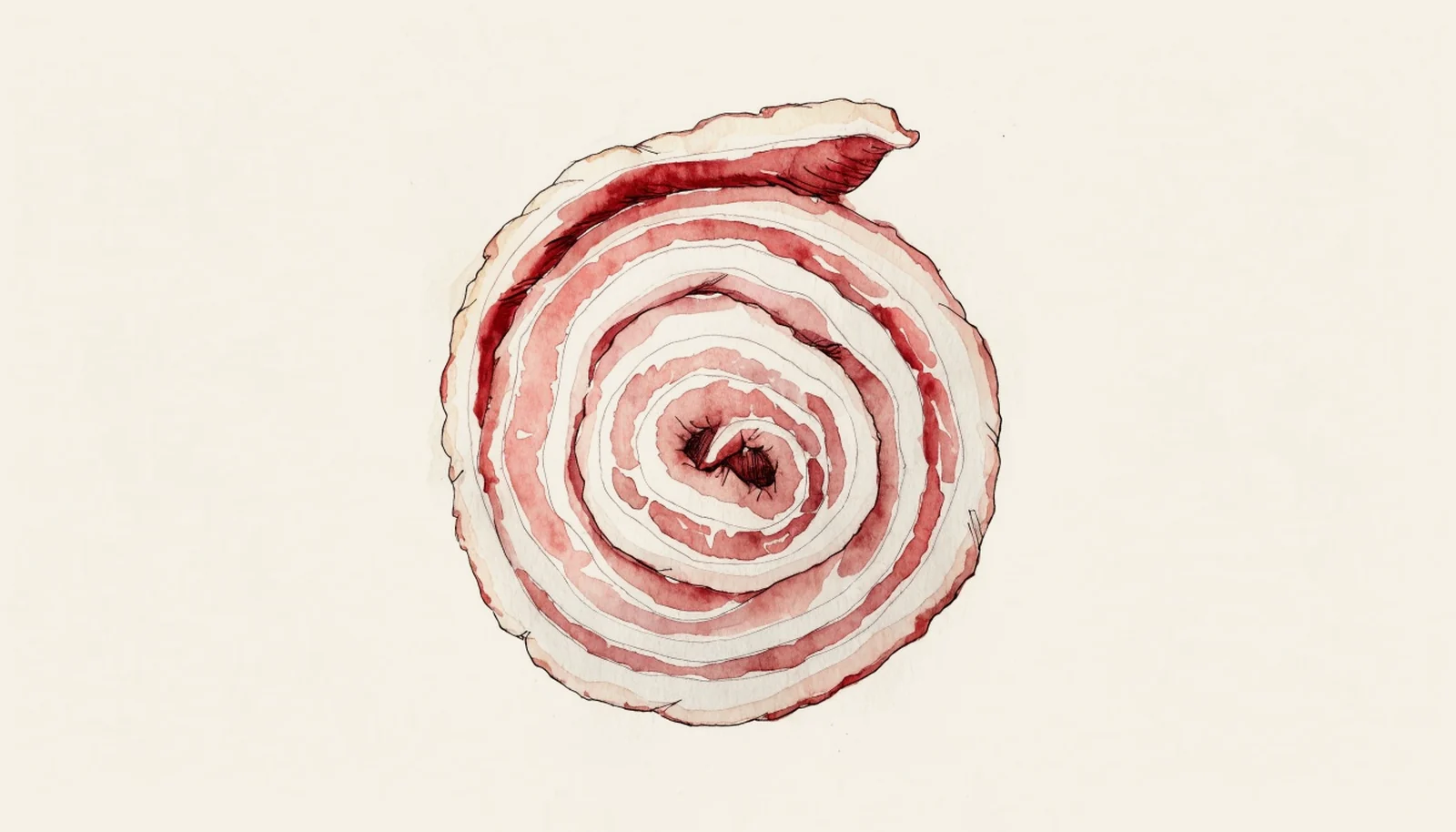
Pancetta is pork belly cured with salt and spices and dried without smoking, and it is sold in two distinct forms: arrotolata, rolled into a cylinder, and tesa, left flat like a slab of bacon. Recipes rarely say which they mean, and the two are not interchangeable. Knowing which one to ask for is part of buying an Italian ingredient for the job in hand.
The single most useful fact about pancetta is the one most often skipped: it is unsmoked. Almost every substitution problem people run into comes from that.
What pancetta actually is
Pancetta is the belly of the pig, salted and seasoned with pepper and often juniper, nutmeg, bay or fennel, then dried for weeks to months. No smoke and no cooking.
The belly gives it its structure: broad alternating bands of fat and meat, softer and more layered than the dense jowl fat of guanciale. That layering is why it renders into a generous, loose fat and why the meat crisps into distinct pieces.
Curing time varies widely. A short-cured pancetta is soft and best rendered; a longer-cured one firms up enough to slice thin and eat raw.
Arrotolata against tesa
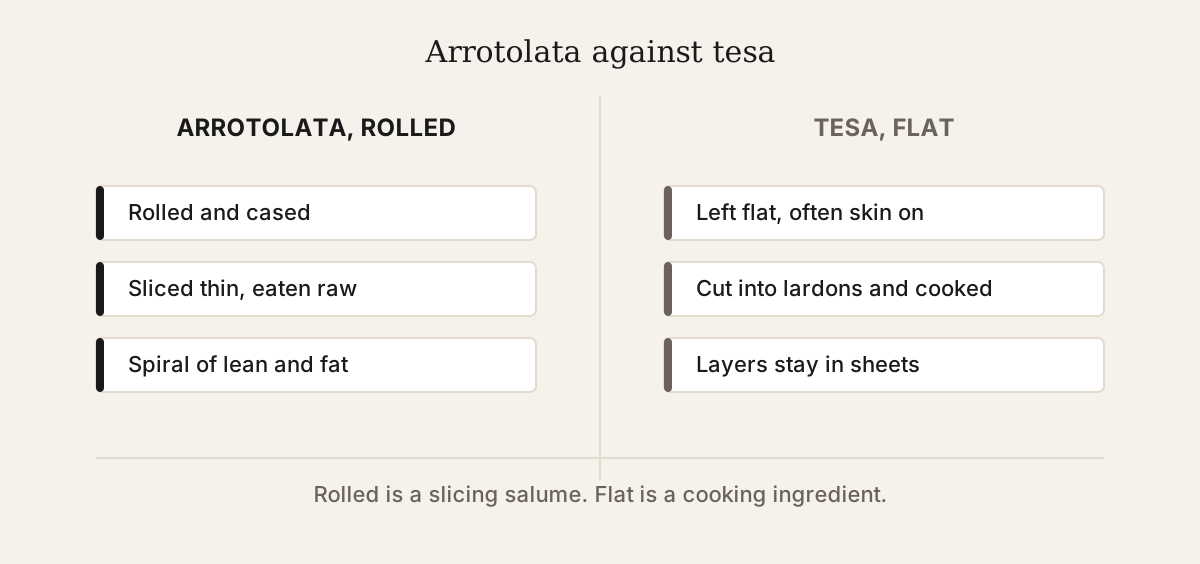
Pancetta arrotolata is deboned belly rolled tightly into a cylinder and cured in that shape, often in a casing. Sliced across, it shows a spiral of fat and meat. It is the form usually intended when pancetta is eaten raw and thin, and it is what most delis will hand you if you ask for pancetta by the slice.
Pancetta tesa is left flat, cured as a slab, and looks much like unsmoked bacon. It is the form intended for cutting into cubes or batons and rendering, and it is what most Italian cooking recipes actually want.
When a recipe says pancetta and means cubes, it means tesa. When a recipe says pancetta and means paper-thin slices on a board, it means arrotolata. Buying the wrong one is not fatal, but tesa sliced thin is floppy and arrotolata cubed falls apart along its spiral.
How to judge one
Look for firm white fat, a clear meat band, visible whole spices where the style calls for them, and a dry rather than wet surface.
Fat should be white and firm, not yellow, and not weeping. A wet, slick surface suggests either a very short cure or poor storage.
The meat should be deep pink to red and evenly coloured. Grey patches mean age.
The spice crust is informative. Traditional pancetta carries visible cracked pepper and often whole juniper or bay on the exterior. A completely bare surface is not a fault, but it suggests a plainer industrial product.
Smell should be clean and porky with the spices detectable. Any sourness means it is going over.
There is no single pancetta DOP
Pancetta as a category is not protected, though specific regional versions carry protection, notably Pancetta Piacentina DOP from Emilia-Romagna. Most pancetta on a United States counter carries no mark at all.
So, as with guanciale, the judgement rests on the product rather than on a certification. If you do see Pancetta Piacentina DOP, that is a genuine guarantee of area and method, and it is usually priced accordingly.
What it should cost
Expect roughly 12 to 25 dollars a pound in the United States, with imported DOP versions above that and domestic cured belly often below.
Pancetta is generally cheaper than guanciale because belly is a larger and more available cut than jowl, and cheaper than prosciutto because the cure is shorter. That price relationship is stable enough to be a sanity check: pancetta priced like prosciutto is either DOP or overpriced.
Domestic American cured belly from good producers is often excellent and frequently better value than imported industrial pancetta.
When bacon is not a substitute
Bacon is smoked and pancetta is not, and in any dish where the pork flavour is meant to sit in the background, smoke moves to the foreground and takes the dish somewhere else.
Where the substitution works reasonably: a robust braise, a bean dish, or anything already carrying strong competing flavours.
Where it does not: carbonara, gricia, a delicate pasta, or anything where the pork is the main savoury note. In those, smoked bacon does not taste like a variation, it tastes like a different dish.
The better substitute is unsmoked cured belly, sometimes sold as green bacon or salt pork depending on the region and the cure. That is much closer to pancetta than any smoked product.
In the other direction, pancetta for guanciale is the more common swap and is covered on the guanciale page: it works, with a looser rendered fat and a less stable emulsion in the Roman pastas.
Where to buy it
Italian delis, whole-animal butchers and specialist importers carry both forms; supermarkets usually stock only pre-cubed tesa in packets.
Checked on 13 August 2026, the first page of United States results for pancetta returned reference material alongside cooking publishers and a Calabrian pork producer. That describes that search on that date rather than recommending any seller.
Pre-cubed packet pancetta is convenient and is usually a short-cured tesa. It renders perfectly well and is the sensible buy for a weeknight carbonara or a soffritto. For anything where the pancetta is the point, buy a piece and cut it yourself, because pre-cubed product dries at every cut face.
Ask which form you are being sold. Many counters use the word pancetta for whichever they carry, and the distinction between arrotolata and tesa is the one that decides whether it suits your method.
Using it
For rendering, cut it into short batons and start in a cold dry pan over low heat so the fat gives up before the exterior colours.
Do not add oil. Belly is generous with fat and added oil dilutes the flavour you paid for. Keep the rendered fat and cook the rest of the dish in it.
For eating raw, buy arrotolata sliced thin to order. It should be translucent and drape. Pancetta sliced thick and eaten raw is unpleasantly fatty, which is where a lot of people conclude they dislike it.
Storage
Whole, wrapped in paper and refrigerated, pancetta keeps for several weeks. Once sliced, use it within about a week.
It freezes acceptably in portions, better than prosciutto and slightly less well than guanciale. Thaw in the refrigerator and use it for rendering rather than for raw slicing.
Surface bloom on a dry-cured piece is normal and wipes off. Fuzzy coloured growth is not.
Frequently asked questions
Is pancetta smoked?
No. Pancetta is cured and air-dried without smoke, and that is the main thing separating it from American bacon. Any product labelled pancetta that tastes smoky has either been smoked, which makes it something other than traditional pancetta, or has picked up smoke flavouring.
Can I eat pancetta raw?
Arrotolata that has been cured long enough is eaten raw, sliced very thin, and is common on antipasto boards. Tesa intended for cooking is usually cured for a shorter time and is better rendered. If you are unsure which you have or how long it was cured, ask the counter, and cook it if you cannot find out.
What is the difference between pancetta and guanciale?
Cut and behaviour. Pancetta is belly, with layered soft fat that renders loose and quickly. Guanciale is jowl, with dense firm fat that renders slowly into a glossier fat and leaves a chewier residue. In the Roman pastas guanciale is specified because its fat makes a more stable emulsion with the egg and cheese.
Does pancetta have a DOP?
Not as a general category. Pancetta Piacentina DOP is a specific protected regional product, but most pancetta carries no mark. Judge it on the fat colour, the meat, the spice crust and the producer rather than expecting a certification to do the work.
Which pancetta do Italian recipes mean?
If the recipe cubes it or renders it, it means tesa, the flat form. If it slices it thin and serves it uncooked, it means arrotolata, the rolled form. Recipes very rarely specify, which is why buying the form that matches the method matters more than the label.
CalItalia Food covers Italian ingredients: what they are, how to tell a good one from an ordinary one, and where to buy them in the United States.