
Culatello: The Cut Taken Out of the Prosciutto
The most expensive Italian cured meat, made from the heart of the leg and aged in river fog. What the DOP controls, how to judge it, and whether you can buy it in the United States.
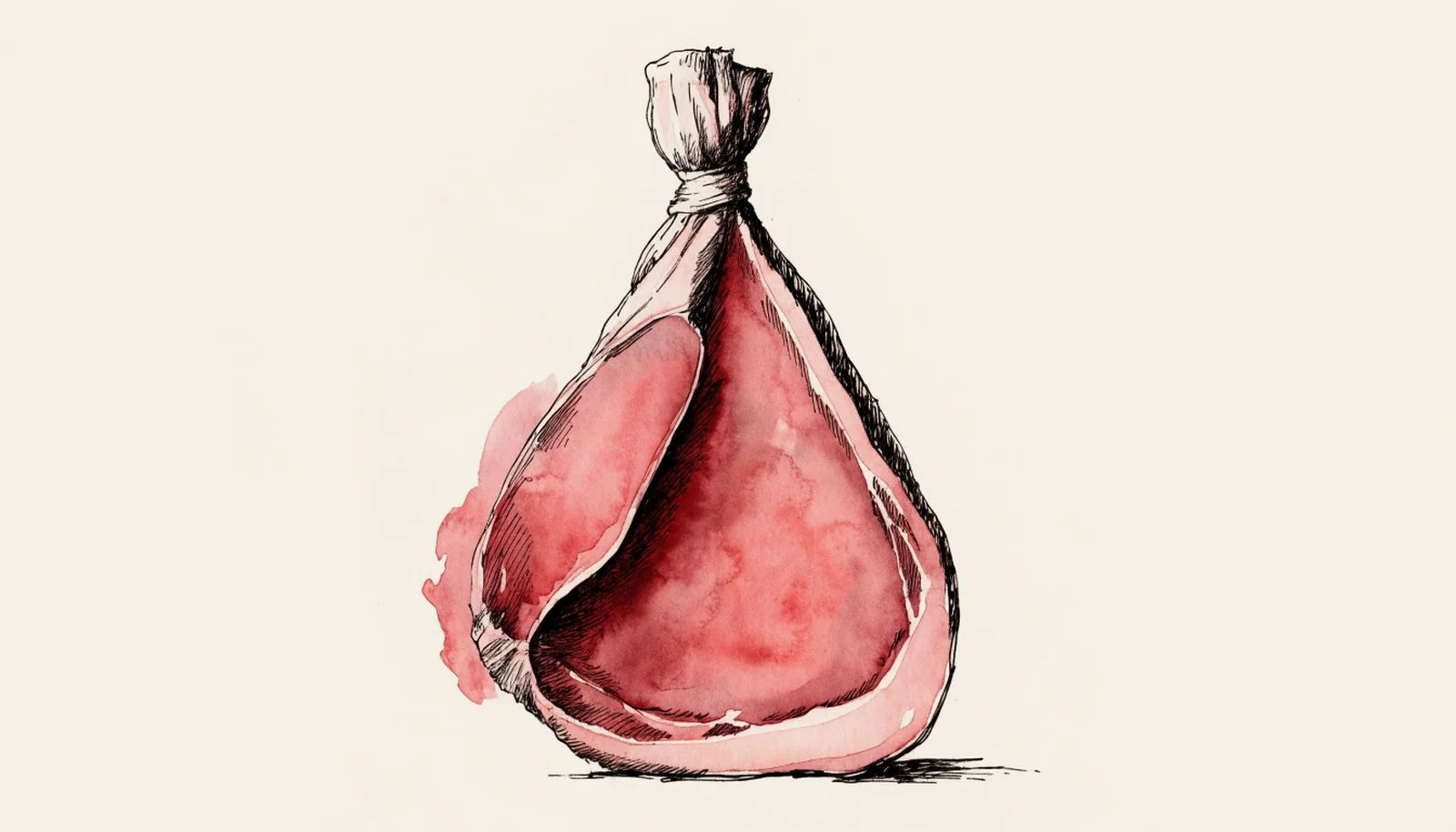
Culatello is made from the central muscle of the pig’s hind leg, the part that would otherwise become the heart of a prosciutto, boned out and cured in a bladder in the damp river fog of the Po valley. It is the most expensive Italian cured meat and the one with the most restrictive production zone. It is a sharp case of the gap between the real article and what reaches American counters.
Its defining fact for an American buyer is availability. Culatello di Zibello DOP has historically been very difficult to obtain in the United States, and most of what carries the name here is something adjacent.
What culatello actually is
Culatello is the boned central muscle of the hind leg, trimmed of fat and rind, salted, cased in a pig’s bladder, tied and aged for at least twelve months. It is not a whole ham and it is not a prosciutto.
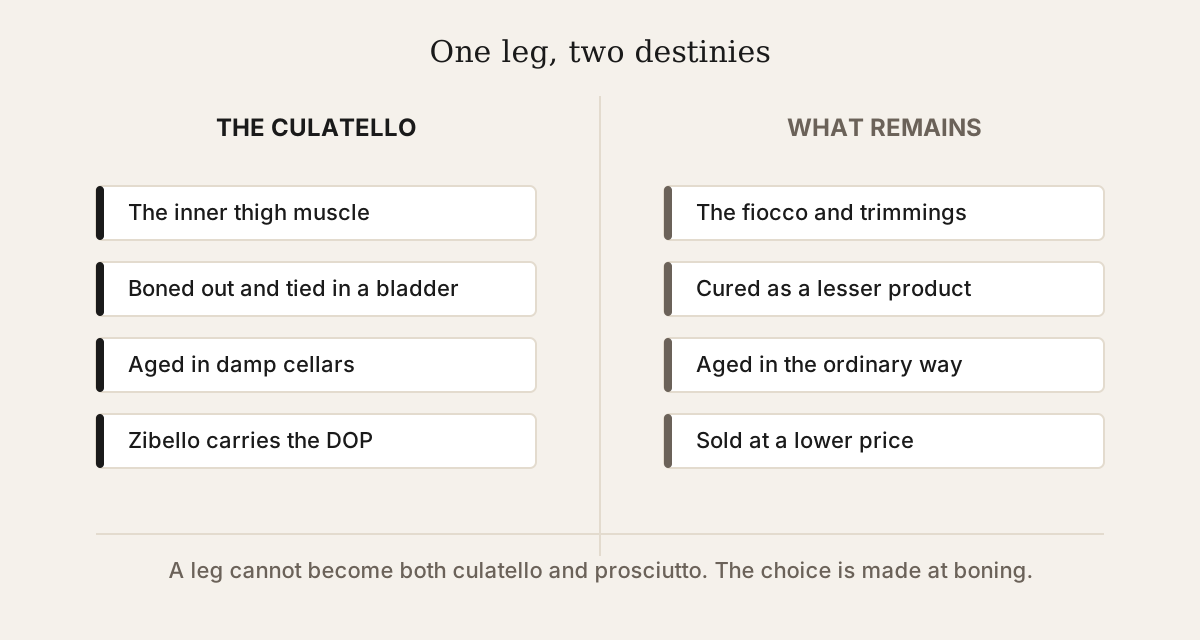
The cut is the point. Taking the culatello out means the leg can never become a prosciutto, so a producer is choosing between two products and forgoing the more saleable one. That is the first reason for the price.
The bladder casing shapes it into its characteristic pear form and controls how it dries, letting moisture leave slowly over a long cure.
The paste is deep red and marbled, softer and sweeter than prosciutto, with a faintly damp, mushroomy note that comes from the ageing conditions.
Zibello, and why the fog matters
Culatello di Zibello DOP covers a small group of comuni in the province of Parma, in the low ground beside the Po, and the discipline requires the ageing to happen there.
The reasoning is the microclimate. The area is foggy and humid in winter and hot in summer, which produces a slow cure with a particular mould flora on the casing. Producers there age culatello in cellars that are deliberately not climate-controlled.
That is unusually specific even by DOP standards, and it is why the protected zone is so small.
Culatello made outside the zone is not Culatello di Zibello. Some is very good, and it cannot use the name.
The import problem, stated plainly
Culatello di Zibello DOP has historically not been available in the United States, and the reason is regulatory rather than commercial.
The bladder casing and the traditional cellar ageing sit awkwardly with United States import requirements for cured meat, which turn on plant approval and process controls. Producers working at the scale Zibello does have generally not pursued approval.
What is sold here under the name is usually one of three things. A domestic American culatello made to a similar method. A product from an approved Italian plant made outside the Zibello zone. Or fiocco, which is the other muscle from the same leg and a legitimate product in its own right.
None of those is a fraud and none is the DOP product. Read the label for the designation and the producer rather than the name alone.
Checked on 13 August 2026, the first page of United States results for culatello returned reference material and specialist sellers, which describes that search on that date rather than recommending any seller. Availability should be confirmed with the seller rather than assumed from a listing.
Culatello against fiocco against prosciutto
Three products from the same leg, and the distinction is worth holding.
Culatello is the central, leanest and most prized muscle, cased in bladder.
Fiocco is the smaller outer muscle from the same leg, often cured alongside, cheaper and slightly leaner still. It is frequently sold in the United States where culatello is not, and it is a genuine product rather than a substitute pretending.
Prosciutto is the whole leg cured bone-in with the rind on, which is a different technique producing a different texture entirely.
A leg can yield a prosciutto or a culatello and fiocco, not both. That trade is the economic fact underneath the whole category.
How to judge it
Look at the colour, the fat marbling and the aroma, and expect softness rather than the firmness of a prosciutto.
The paste should be deep red to almost purple, considerably darker than prosciutto, with fine intramuscular fat rather than a fat cap.
It should be soft and yielding. Culatello is more tender than prosciutto and a hard, dry slice indicates over-ageing or poor storage.
The aroma is the giveaway. A good culatello smells sweet and faintly of damp cellar or mushroom. That note is the ageing environment and its absence suggests a climate-controlled cure.
Slice it very thin, thinner than prosciutto, and let it come to room temperature.
What it should cost
Where it is available at all, expect it to be the most expensive cured meat on the counter, well above Prosciutto di Parma per pound.
The price reflects the forgone prosciutto, the long cure, the very low yield per leg and the small production zone. A culatello priced near prosciutto is not the DOP product, and the label will usually say so if read carefully.
Fiocco is considerably cheaper and is the sensible entry point for anyone curious about the style.
Storage
Once cut, wrap the face closely in paper and refrigerate, and use it within a week. Sliced culatello keeps only two to three days with any quality.
It dries faster than prosciutto because it has no rind and less fat, so the cut face needs more protection. The general rules are in the guide to how long Italian cured meat keeps.
Do not freeze it. The texture that justifies the price is the first thing lost.
Bring it to room temperature before eating, which matters more here than for any other salume on this site, because cold flattens both the softness and the cellar aroma.
Frequently asked questions
Can I buy Culatello di Zibello in the United States?
Historically it has been very difficult, for regulatory rather than commercial reasons, since the traditional bladder casing and uncontrolled cellar ageing sit awkwardly with United States import requirements. Products sold here under the name are usually domestic, from outside the Zibello zone, or fiocco. Check the designation and the producer rather than the name.
What is the difference between culatello and prosciutto?
The cut and the method. Culatello is the boned central muscle of the leg, cased in a bladder and cured without rind or bone. Prosciutto is the whole leg cured bone-in with the rind on. A leg can produce one or the other, not both, which is a large part of why culatello costs more.
What is fiocco?
The other muscle from the same hind leg, cured alongside culatello and usually cheaper. It is a legitimate product rather than a substitute pretending to be culatello, and it is far more available in the United States. For anyone curious about the style it is the sensible place to start.
Why does culatello smell of mushrooms?
Because of the ageing environment. The Zibello cellars are deliberately not climate-controlled and the damp Po valley fog produces a particular mould flora on the bladder casing, which contributes a sweet, faintly earthy note. Its absence usually indicates a climate-controlled cure rather than a fault.
How thin should culatello be sliced?
Thinner than prosciutto, thin enough to be translucent and to drape rather than hold a shape. It is softer and more tender than prosciutto, so a thick slice eats fatty and loses the texture that distinguishes it. Let it warm for fifteen minutes before serving.
CalItalia Food covers Italian ingredients: what they are, how to tell a good one from an ordinary one, and where to buy them in the United States.