Speck Alto Adige: The Ham That Is Cured and Smoked
A northern Italian ham that borrows from both the Mediterranean and the Alpine traditions. What the IGP requires, why the word speck alone means little, and how to judge and use it.
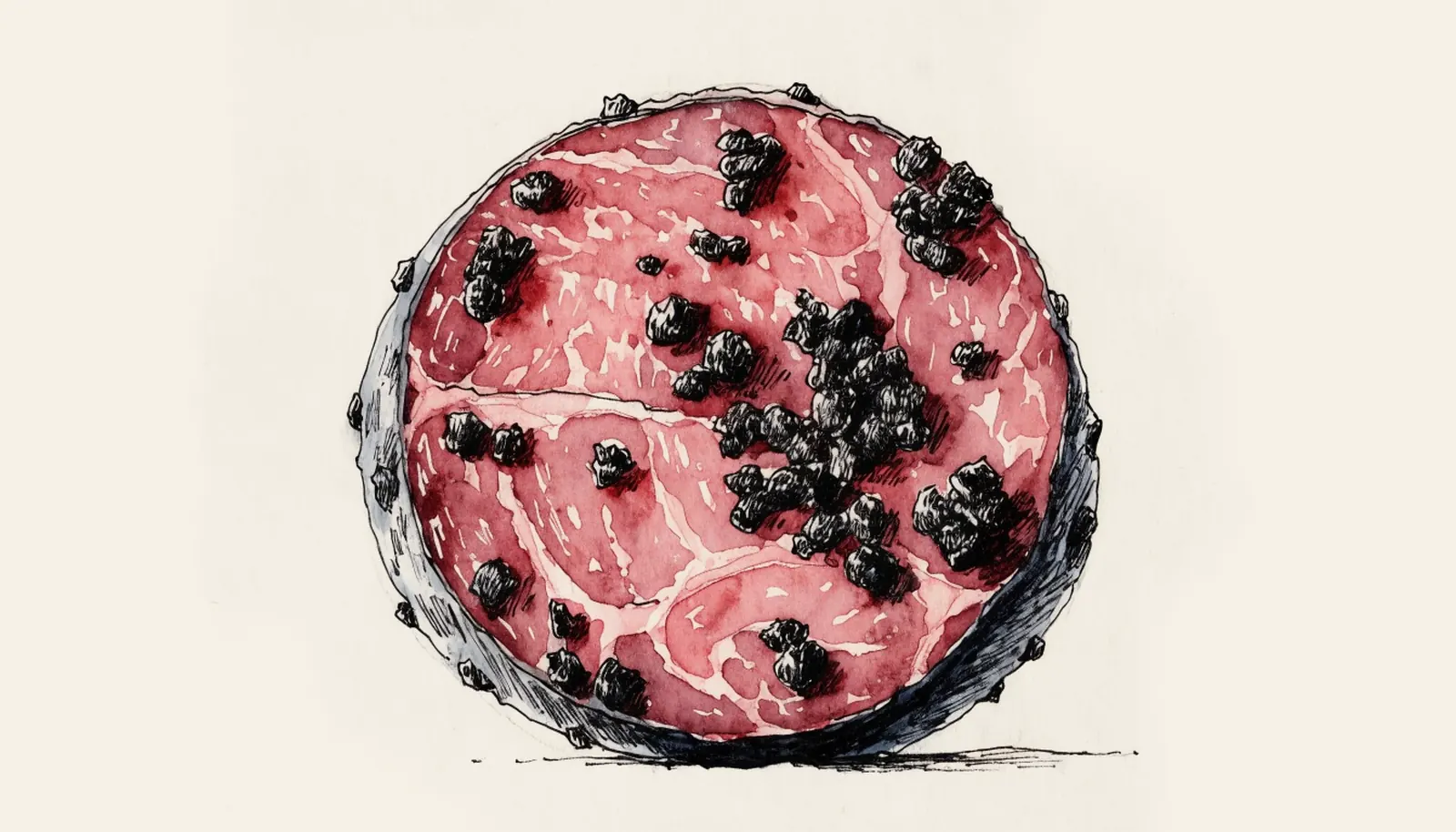
Speck Alto Adige is a boned pork leg, salted, lightly smoked over beech or juniper and then air-dried for at least twenty-two weeks in the mountains of South Tyrol. It is the one significant Italian ham that is smoked, and the smoke is light rather than dominant. That balance is one of the tells that separate the real article from the rest.
The word speck on its own means little in English. It is used across German-speaking Europe for several quite different products, so the designation is doing most of the work here.
What speck actually is
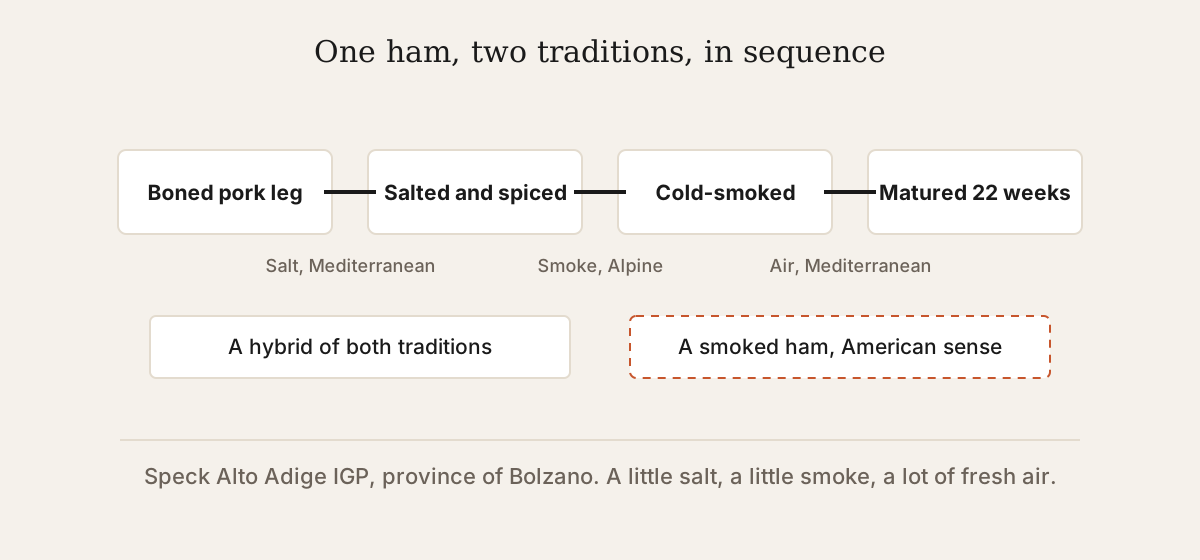
Speck Alto Adige is a deboned pork leg, rubbed with salt and a spice mix that typically includes juniper, bay, pepper and sometimes garlic, cold-smoked at low temperature, then matured for a minimum of twenty-two weeks.
The smoke is light and cold. The discipline caps the smoking temperature well below the point where the meat cooks, and the traditional wood is beech, often with juniper. This is not a smoked ham in the American sense.
The leg is boned and flattened rather than left whole with the bone in, which is what distinguishes its shape from prosciutto and gives it a squarer profile.
A firm fat cap remains on one side, and it is meant to be eaten rather than trimmed.
The producers’ phrase for the method is a little salt, a little smoke, a lot of fresh air, which is a fair summary of the balance.
Why the region produced a hybrid
South Tyrol sits where the Italian and Austrian traditions meet, and its ham reflects both.
The Mediterranean tradition cures with salt and air, as Parma does, relying on a dry climate and a long maturation.
The Alpine tradition smokes, because the climate is damper and colder and smoke helps preserve.
Speck does both, lightly. It is neither a Parma ham nor a Black Forest ham, and it is the clearest example in Italian salumi of a border region producing something that belongs to both sides.
The area is officially bilingual, and the product appears as Speck Alto Adige and as Südtiroler Speck on the same packaging.
The IGP, and what the bare word does not tell you
Speck Alto Adige IGP requires production in the province of Bolzano, sets the maximum smoking temperature, requires a minimum twenty-two week maturation and controls the seasoning and the finished dimensions.
Without the designation, speck means very little. In German-speaking countries the word covers products from cured pork belly to plain lardo-like fat, several of which have no relationship to the South Tyrolean ham.
So the mark is doing more work here than on most products, because the underlying word is genuinely ambiguous rather than merely unprotected.
Checked on 13 August 2026, the first page of United States results for speck alto adige returned reference material and specialist food sellers, which describes that search on that date rather than recommending any seller.
How to judge a slice
Look at the fat, the colour and the depth of smoke, in that order.
The fat cap should be white and firm and should be present. Speck trimmed of all its fat has had part of the point removed.
The lean should be deep red-brown, darker than prosciutto because of the smoke, and even across the slice.
The smoke should be detectable and not dominant. A speck that tastes strongly of smoke has either been over-smoked or is not the IGP product. The balance should let the cured pork through.
A rind is usually present on one edge and is not eaten.
Slice it thin but not translucent. Speck is firmer than prosciutto and holds a slightly thicker slice well.
What it should cost
Expect roughly 25 to 40 dollars a pound in the United States, in the same region as Prosciutto di Parma.
The twenty-two week minimum, the deboning and the smoking step all add cost, and imported IGP product sits at the upper end of the band.
Domestic American speck exists and is generally a different product, often more heavily smoked and shorter cured. It should be judged on its own terms rather than as a cheaper IGP.
How to use it
Eat it as it comes on a board, and unlike most premium hams it also cooks well.
The smoke and the firmer texture mean speck stands up to heat in a way prosciutto does not. It goes into pasta, onto pizza, wrapped around vegetables, and into knödel and other Alpine dishes.
That is a genuine difference from Parma. Cooking a Prosciutto di Parma is a waste; cooking speck is a normal use of it, and the smoke survives.
On a board it wants something sharp alongside, pickles or a mountain cheese, since the fat and the smoke are both rich.
It is also excellent raw with rye bread and butter, which is how South Tyrol eats it.
Storage
Whole and wrapped in paper, several weeks refrigerated. Sliced, three to five days, which is slightly longer than prosciutto because the smoke and the firmer texture slow drying. The general rules are set out in the guide to how long Italian cured meat keeps.
Keep the fat cap intact on a piece you are working through, since it protects the cut face.
It freezes better than most premium hams because of its firmer texture, and it is a reasonable thing to do with a piece destined for cooking rather than a board.
A white bloom is normal. Fuzzy coloured growth is not.
Frequently asked questions
Is speck the same as prosciutto?
No. Speck is boned, lightly cold-smoked and matured for at least twenty-two weeks; prosciutto is cured bone-in with no smoke for twelve months or more. Speck is firmer, darker and carries a light smokiness, and unlike prosciutto it is commonly cooked. They come from the same cut and are made by different methods.
Is speck heavily smoked?
No, speck is only lightly smoked, and a strongly smoky product is either over-smoked or not the IGP version. The discipline caps the smoking temperature well below the point where the meat cooks, and the producers’ own summary of the method emphasises fresh air over smoke. The smoke should sit behind the cured pork rather than in front of it.
Can I cook with speck?
Yes, speck is one of the few premium Italian hams where cooking is a normal use rather than a waste. Its smoke and firmer texture survive heat, which is why it appears in pasta, on pizza and in Alpine dishes. Cooking a Prosciutto di Parma the same way would throw away what you paid for.
What does speck mean without the designation?
Very little in English. The word is used across German-speaking Europe for products ranging from cured pork belly to plain cured fat, several unrelated to the South Tyrolean ham. That is why Speck Alto Adige IGP matters more than most marks: the underlying word is genuinely ambiguous rather than simply unprotected.
Why is it Italian if the name is German?
Because South Tyrol is an officially bilingual province of Italy with a German-speaking majority, and the product belongs to both traditions. It appears as Speck Alto Adige and Südtiroler Speck on the same packaging. The method itself is a hybrid, salting from the Mediterranean tradition and smoking from the Alpine one.
CalItalia Food covers Italian ingredients: what they are, how to tell a good one from an ordinary one, and where to buy them in the United States.