
Strolghino: The Culatello Offcut Salami, Eaten Young
A thin, quick-cured salami made from the trimmings left after a culatello is shaped. Why it is eaten within weeks, why the best come from the best hams, and how to judge and use one.
Strolghino is a thin, soft, quickly cured salami from the Parma lowlands, made from the lean trimmings left over when a culatello is cut from the pig’s hind leg. It is aged for weeks rather than months and is meant to be eaten young. It is one of the Italian ingredients that barely travel.
It is the one salume in this section whose quality is determined by a product it is not, and that relationship is the most useful thing to understand about it.
What strolghino actually is
Strolghino is very lean pork trim, ground, lightly seasoned with salt and pepper, stuffed into a narrow casing and cured for around three to six weeks.
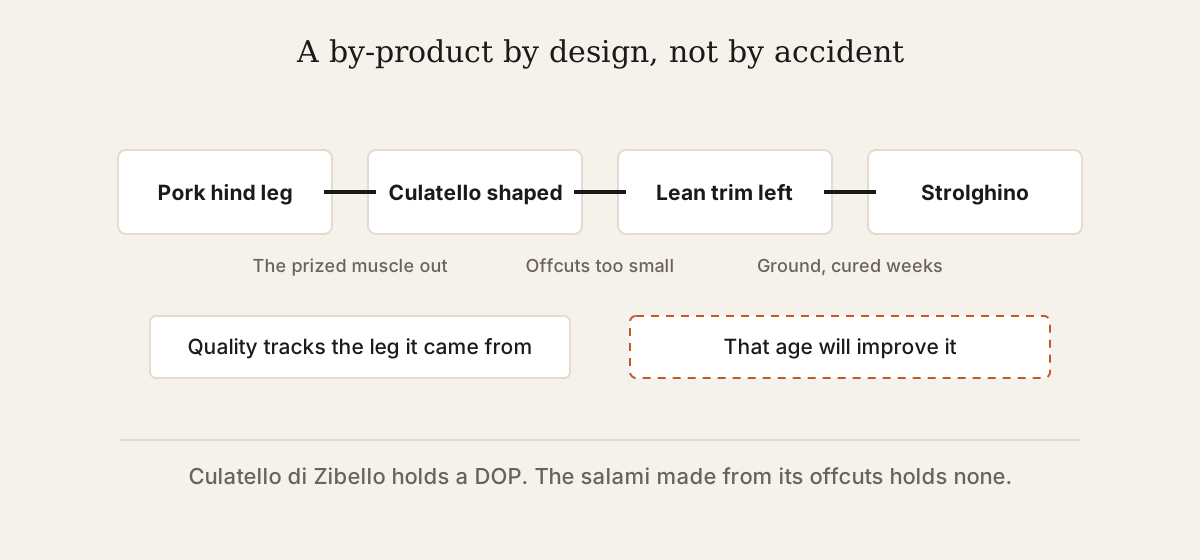
It is a by-product by design. Shaping a culatello from a hind leg leaves lean offcuts of excellent quality that are too small and irregular for any whole-muscle product, and strolghino is what they become.
It is very lean. Little fat is added, which is unusual for a salami and is the direct consequence of what it is made from.
The casing is narrow, so the salami is thin and cures quickly.
The seasoning is minimal, salt and pepper with sometimes a little garlic or wine. There is nothing to hide behind.
It is soft rather than firm, closer in texture to a fresh salami than to a dry-aged one.
Why it is eaten young
Strolghino is one of the few salumi with a short optimum window, and going past it is the usual way people are disappointed by it.
Leanness is why. A salami with little fat has nothing to protect it from drying, so it goes from soft to hard quickly.
The window is weeks, not months. Three to six weeks is the intended range, and a strolghino held much longer becomes tough and salty rather than more interesting.
This inverts the usual rule. Most cured meat improves and concentrates with age, and buyers reasonably apply that expectation here, where it does not hold.
A hard strolghino is not spoiled, only past its purpose. It can be chopped into a cooked dish, which is what a Parma kitchen would do with one.
So the date matters more than for anything else on the counter. Ask when it was made, which is a question worth asking and one that has no equivalent for a Felino.
Why the best ones come from the best hams
Strolghino’s quality tracks the culatello it came from, which is a genuinely unusual dependency.
The trim is only as good as the leg. A culatello producer working with heavy pigs from the traditional pool generates trim of that quality; a lesser leg generates lesser trim.
A producer making culatello has an interest in the strolghino. It carries their name and is sold to the same customers, so it is not treated as waste.
Buying from a known culatello producer is therefore the shortcut. The name on the strolghino tells you what leg it came from, and there is no other reliable signal.
Strolghino made from generic pork trim exists and is a different product wearing the name, since the name describes an origin in the workflow rather than a protected origin in law.
It carries no DOP or IGP. Culatello di Zibello holds a DOP; the salami made from its offcuts does not.
How to judge one
Judge it on softness, then colour, then smell.
It should be soft and yielding, giving easily under a thumb. Firmness means it has been held too long.
The lean should be a bright rose, not dark. A deep brick red indicates age, which is the wrong direction for this salami.
There should be very little visible fat, and what there is should be white. A strolghino with substantial fat is not made from culatello trim.
It should smell fresh and sweet, faintly of the curing room. Any sourness is a fault, and in a barely aged salami there has been no time to mask one.
The casing should still cling. A casing pulling away from the meat means it has dried and shrunk.
Checked on 13 August 2026, the first page of United States results for strolghino returned reference material and Italian producers rather than United States sellers, which describes that search on that date rather than recommending any seller. Counting rule: a result counts as a seller when it offers strolghino for purchase into the United States. On that rule the first page carried none.
What it should cost and whether you can get it
Expect roughly 25 to 40 dollars a pound where it is available in the United States, and availability is the real problem.
Strolghino’s short window is fundamentally hostile to export. A salami intended to be eaten within weeks of production spends most of that window in transit if it crosses an ocean.
This is a supply constraint rather than a regulatory one, which distinguishes it from culatello itself, whose United States history involves genuine regulatory obstacles.
A domestic producer making culatello-style products is the more realistic route, and some American salumerie make a strolghino equivalent from their own trim.
Treat any strolghino you find as a now product. Buy it, eat it that week, and do not save it for an occasion.
How to use it
Eat it as it comes, sliced thick, at room temperature, within days of buying it.
Its mildness and softness suit plain accompaniment: bread, butter, nothing else. In its own region it is the salame eaten standing up in the shop.
Slice it thicker than you would a firm salami. Thin slices of something this soft tear and stick together.
It is the natural filling for torta fritta, alongside the other Parma salumi, where the hot dough softens it further.
Do not save it. The instinct to hold a good salume for a special occasion is exactly wrong here.
A stale one goes into a soffritto, chopped fine, where the concentrated lean is useful and the lost texture does not matter.
Storage
Refrigerated and wrapped in paper, one to two weeks, and it is declining throughout that period rather than improving.
It hardens rather than spoils. The failure mode is drying out, which is a loss of quality rather than a safety question.
Paper rather than plastic, though the usual reasoning is weaker here since the salami is not going to be kept long enough for the casing to matter much.
Do not freeze it. The soft texture that defines it does not survive, and a frozen strolghino is a hard salami with no compensating depth.
Eat the whole thing. This is a product to buy in the quantity you will finish.
Frequently asked questions
What is strolghino made from?
Strolghino is made from the lean pork trimmings left over when a culatello is cut and shaped from the pig’s hind leg. Those offcuts are of high quality but too small and irregular for a whole-muscle product, so they are ground, lightly seasoned and made into a thin, quick-curing salami. Its quality therefore depends directly on the quality of the leg the culatello came from.
Why is strolghino eaten so young?
Strolghino is eaten within three to six weeks because it is very lean and has almost no fat to protect it from drying out. Left longer it becomes hard and salty rather than developing the depth that ageing gives a fattier salami. This inverts the usual expectation that cured meat improves with time, which is the most common reason people are disappointed by one.
Is strolghino the same as culatello?
Strolghino and culatello are different products from the same leg. Culatello is the prized whole muscle, cured in a bladder for a year or more and among the most expensive Italian salumi. Strolghino is a soft, thin salami made from the trim left after the culatello is shaped, cured for a few weeks and eaten young. Neither substitutes for the other.
Does strolghino have a DOP?
Strolghino carries no DOP and no IGP, although Culatello di Zibello, the product whose trimmings it is made from, holds a DOP. The name describes a position in the workflow rather than a protected origin, so anyone may use it. The practical guarantee is the producer’s name, since a serious culatello maker generates good trim and a generic one does not.
My strolghino has gone hard. Is it still good?
A hard strolghino is past its intended window rather than spoiled, and it remains perfectly safe to eat. It will be tough and salty sliced, which is not how it is meant to be enjoyed. The sensible use is to chop it finely into a soffritto or a bean dish, where the concentrated lean pork is an advantage and the lost softness does not matter.
CalItalia Food covers Italian ingredients: what they are, how to tell a good one from an ordinary one, and where to buy them in the United States.