
Calabrian Chilli Oil: Infused, Not Pressed, and Why That Matters on the Label
Olive oil infused with Calabrian chilli, sold as olio santo. What separates an infusion from a flavoured oil, why the base oil is half of what you buy, and how to judge and use a bottle.
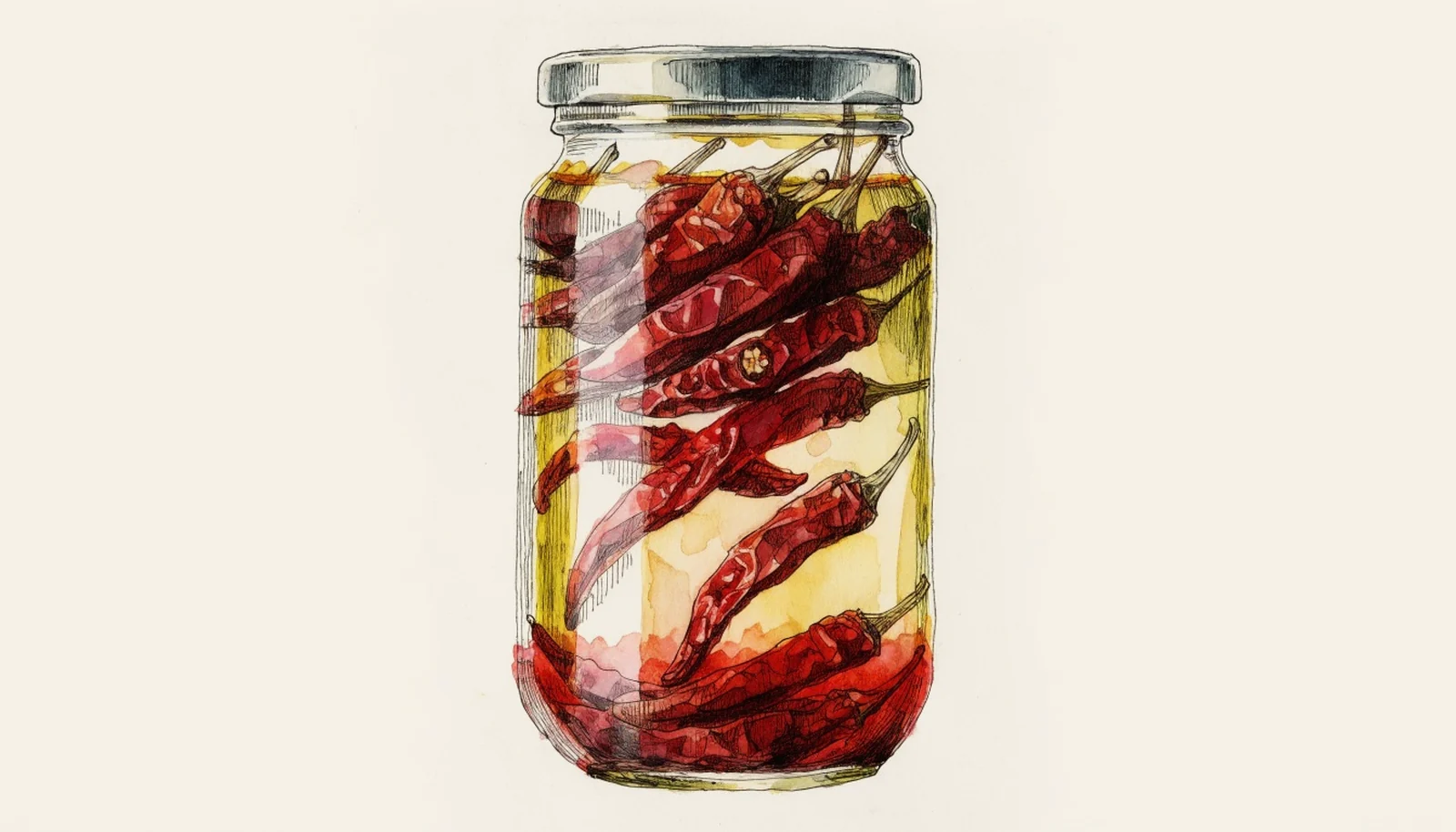
Calabrian chilli oil is olive oil infused with the chilli of Calabria, sold in Italy as olio santo, holy oil, and used as a condiment rather than a cooking fat. It is an infusion, not a pressed oil, and that distinction governs almost everything about buying one. It is also a compact example of the gap between an Italian original and a cheaper copy.
The oil in the bottle was already olive oil before the chilli arrived. What you are judging is therefore two products at once, and most labels are informative about only one of them.
What Calabrian chilli oil actually is
Calabrian chilli oil is made by steeping dried or fresh Calabrian chilli in olive oil until the oil takes up the heat, the colour and the aroma.
Olio santo is the traditional name, and in Calabrian households it is made by dropping chilli into a bottle of the family’s own oil and leaving it.
The chilli is the peperoncino calabrese, a small fiery pod covered separately on this site, which gives a broad warming heat rather than a sharp one.
Infusion is slow. Weeks of steeping, sometimes with gentle warming, and the oil deepens in colour throughout.
It is a condiment. Olio santo goes on food at the table, over pizza, pasta, beans, grilled vegetables and bread, rather than into a pan.
It carries no DOP. Calabrian chilli oil is a traditional preparation rather than a protected product, so the producer and the label carry the judgement.
Some bottles contain whole pods and some are filtered clear, and both are traditional.
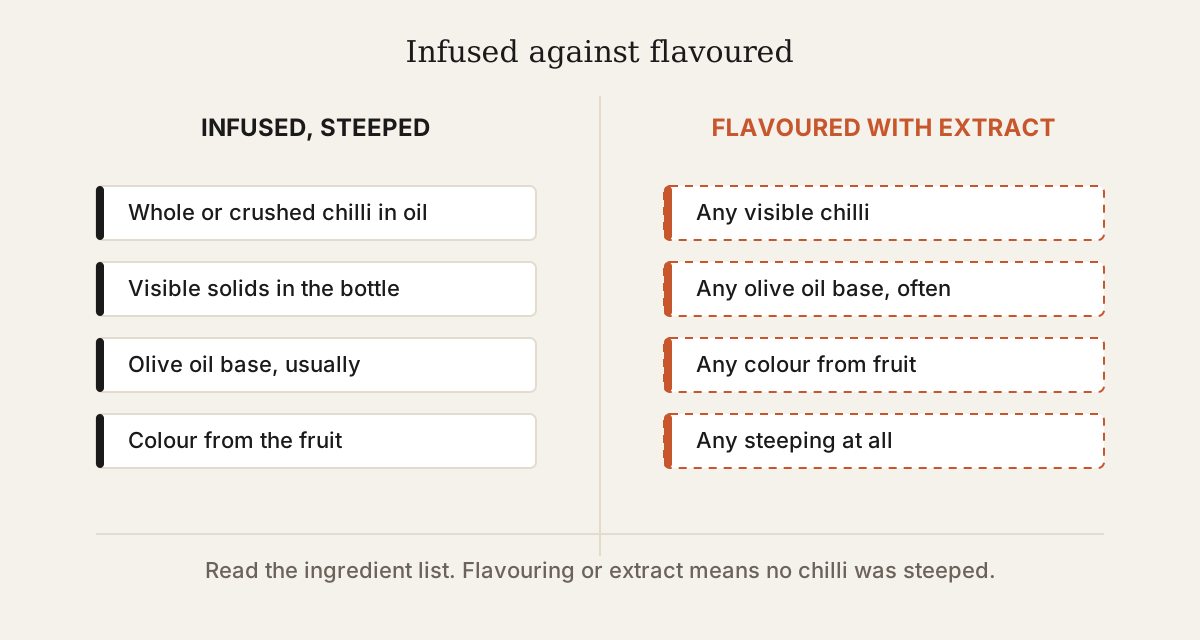
Infusion against flavoured oil
The two are made differently and the difference is visible before you taste anything.
A genuine infusion starts with real olive oil and real chilli, and the oil’s own character is still present underneath the heat.
A flavoured oil starts with a neutral base, frequently sunflower or a light refined oil, and takes its heat from chilli extract or oleoresin.
Colour is the first signal. An infusion is a warm orange-red that varies between batches; an extract-flavoured oil is often a uniform, slightly artificial bright red.
Heat delivery differs. Infused heat arrives gradually and spreads; extract heat hits the front of the mouth immediately and sharply.
The ingredient list settles it. Extra virgin olive oil and chilli is an infusion. Sunflower oil, chilli extract, colouring, or the phrase natural flavouring, is not.
Neither is unsafe or dishonest where the label is accurate. The point is that they cost different amounts to make and should not cost the same to buy.
Why the base oil is half the purchase
An infused oil is mostly oil, and buyers routinely judge only the chilli.
Extra virgin olive oil is the correct base and is what a Calabrian household would have used.
Refined or pomace oil in the base is the commonest economy and it is declared. It carries none of the peppery, grassy character that makes the finished condiment interesting.
Harvest date matters here as it does for any olive oil, since a chilli infusion does not stop the base oil from oxidising.
A rancid base ruins the bottle regardless of how good the chilli was, and the chilli heat can mask early rancidity, which is why smelling it matters.
Cheap chilli oil is usually cheap because of the oil, not because of the chilli, since chilli is a very small proportion by weight.
Checked on 13 August 2026, the first page of United States results for calabrian chilli oil returned a Calabrian producer’s bottled product on a general marketplace alongside specialist and cooking retailers, which describes that search on that date rather than recommending any seller. Availability here is good.
How to judge a bottle
Judge it on the ingredient list, then the colour, then the smell.
The list should be short. Extra virgin olive oil and Calabrian chilli, perhaps salt. Anything else is worth reading twice.
Colour should be a warm orange-red, slightly cloudy in an unfiltered bottle, varying between batches.
Sediment and visible pod fragments are a good sign in an unfiltered bottle, not a fault.
It should smell of chilli and olive oil together. If the oil smells of nothing beneath the chilli, the base is refined.
A stale, waxy or crayon-like note is rancidity in the base oil, and it is the fault to check for.
Dark glass or a tin is a better package than clear glass, since light degrades both the oil and the chilli colour.
What it should cost
Expect roughly 12 to 25 dollars for a 250 millilitre bottle in the United States.
The cost tracks the base oil almost entirely. Good extra virgin olive oil is expensive, chilli is cheap, and the infusion adds time rather than material cost.
A very cheap bottle is a refined-oil base, which the label will confirm.
Making it is trivially easy and gives you control over both components. Good oil and dried Calabrian chilli, left for a few weeks.
Imported Calabrian bottles carry a freight premium that does not always buy a better base oil, so the ingredient list matters more than the origin.
Buy small bottles. An infused oil has a shorter useful life than a plain one and a large bottle will go stale before it is finished.
How to use it
Use it raw, at the table, over finished food. It is a condiment.
Its heat and its olive character suit plain, starchy and fatty things: pizza, pasta, beans, bread, grilled vegetables, a bean soup.
Do not fry with it. Heat destroys the aromatics you paid for and can turn the chilli bitter, and a cheaper oil does the frying.
Add it at the end of a cooked dish, off the heat.
It is the standard Calabrian finish for pizza and pasta, used the way an ordinary olive oil would be elsewhere.
A few drops go a long way, since infused heat accumulates on the palate.
Use the pods too if the bottle is unfiltered. They are edible and intensely hot.
Storage
In a cool dark cupboard, six months to a year, and less once opened.
Keep it away from light and heat. Both degrade the base oil and fade the chilli colour, and a bottle on a sunny windowsill is the fastest way to ruin one.
Do not refrigerate it. The oil clouds and solidifies, which is harmless and unhelpful.
A bottle containing whole fresh chilli should be refrigerated and used quickly, since fresh material in oil carries a genuine spoilage risk that dried material does not. The same fresh-against-dried line runs through herb infused olive oil.
Use it within a few months of opening. Oxygen degrades the base oil steadily once the seal is broken.
Rancidity is the end point and it is not recoverable.
Frequently asked questions
What is olio santo?
Olio santo means holy oil and is the traditional Calabrian name for chilli-infused olive oil, made in households by steeping chilli in the family’s own oil for weeks. It is used as a table condiment over pizza, pasta, beans and bread rather than as a cooking fat. Bottles sold as Calabrian chilli oil are the commercial version of the same preparation.
What is the difference between infused chilli oil and flavoured chilli oil?
An infusion steeps real chilli in real olive oil, so the oil’s own peppery character remains underneath the heat and the colour varies between batches. A flavoured oil uses a neutral refined base dosed with chilli extract or oleoresin, giving a uniform bright red and a sharp immediate heat. The ingredient list distinguishes them: extract, colouring or natural flavouring indicates the latter.
Can you cook with Calabrian chilli oil?
Calabrian chilli oil should be used raw at the table rather than cooked with, since heat destroys the aromatics that justify the price and can make the chilli bitter. It is a condiment in the same register as a finishing olive oil. For frying or sautéing, a cheaper plain oil does the job and the chilli oil goes on afterwards.
Why is my chilli oil so expensive?
The cost of chilli oil is almost entirely the base oil, since chilli is a very small proportion by weight and is inexpensive. A bottle made on good extra virgin olive oil costs what good olive oil costs. A cheap bottle has economised on the base, usually with refined or pomace oil, which the ingredient list will show and which carries none of the olive character.
Does chilli oil go off?
Chilli oil goes rancid as the base olive oil oxidises, which is the real failure mode and is not recoverable. Chilli heat can mask early rancidity, so smelling for a stale, waxy or crayon-like note matters more than tasting. Keeping it in a cool dark place and buying small bottles are the practical protections. Bottles containing whole fresh chilli should be refrigerated and used quickly.
CalItalia Food covers Italian ingredients: what they are, how to tell a good one from an ordinary one, and where to buy them in the United States.