
Ligurian Olive Oil: The Delicate One, and Why Pesto Needs It
Taggiasca olives from the Riviera give a mild, sweet, low-bitterness oil. Why the region makes so little, what the DOP means when you buy, what to use it for, and why a robust oil ruins pesto.
Ligurian olive oil is mild, sweet and low in bitterness, made almost entirely from taggiasca olives grown on terraced slopes along the Riviera. Its scarcity puts it among the Italian ingredients where origin shows in the price.
It is the gentlest of the well-known Italian regional styles, and that gentleness is why Genoese pesto is made with it rather than with a Tuscan oil.
What defines the Ligurian style
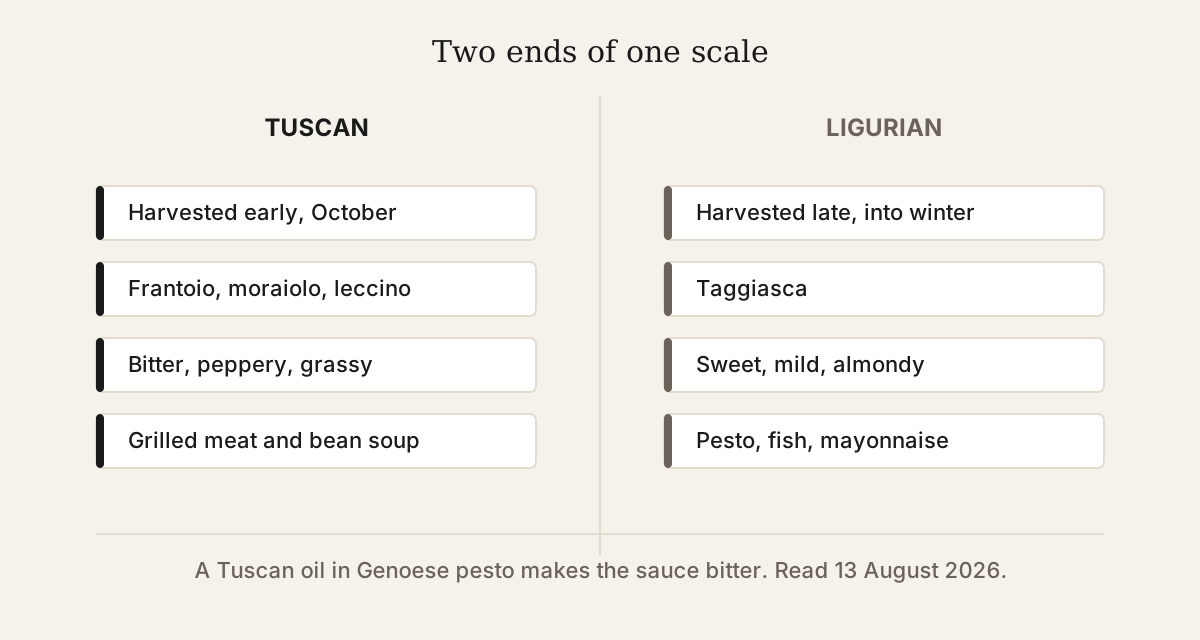
Ligurian oil is delicate, sweet and lightly fruity, with very little of the bitterness and pepper that define central Italian oils.
Taggiasca is naturally low in polyphenols, which is the chemical reason for the mildness.
The fruit is harvested late, often into January and February, when it has ripened fully.
Late ripe fruit yields more oil and fewer phenolics, which reinforces the style.
Almond, pine nut and a faint sweetness are the notes usually named.
Bitterness is minimal and pungency is slight, which some tasters read as a weakness and Ligurians read as the point.
Why the region makes so little
Liguria is a small, steep, terraced region and its olive production is tiny by Italian standards.
The groves are on terraces cut into steep coastal slopes, built and maintained by hand over centuries.
Mechanical harvesting is largely impossible on that terrain.
Yields per hectare are low and labour costs are high.
Total production is a fraction of Puglia’s, and much of it never leaves the region.
Real Ligurian oil is expensive for these reasons, and cheap oil labelled Ligurian is worth scrutinising.
Riviera Ligure DOP
Riviera Ligure DOP is the protected designation, divided into three sub-zones along the coast.
Riviera dei Fiori is the western sub-zone, around Imperia, and is the taggiasca heartland.
Riviera del Ponente Savonese is the central sub-zone.
Riviera di Levante is the eastern sub-zone, towards La Spezia.
The DOP requires a minimum taggiasca content in the western zone, where the cultivar dominates.
As with every designation on this site, it constrains origin and method and does not certify that the oil is good.
Why pesto needs a mild oil
Genoese pesto is built around basil, and a bitter oil competes with it rather than carrying it.
Basil is delicate. A high-polyphenol oil overwhelms it entirely.
The traditional recipe specifies Ligurian oil precisely because it is mild.
Pine nuts and Parmigiano are also delicate, and a peppery oil flattens both.
A Tuscan oil in pesto produces a bitter sauce, which is a common error outside Liguria and is not a matter of preference so much as of the sauce not working.
Pesto is also where an expensive oil is worth using, since it is raw and the oil is a primary flavour rather than a background one.
What to use it for
Ligurian oil suits everything delicate, and it is wasted on anything that would mask it.
Pesto, first and obviously.
Fish and seafood, particularly raw or lightly cooked.
Vegetable dishes where the vegetable should lead.
Mayonnaise and emulsions, where a bitter oil turns unpleasant.
Not on grilled red meat or bean soups, which want the bitterness a Tuscan or Pugliese oil brings.
Checked on 13 August 2026, United States listings for Riviera Ligure DOP extra virgin olive oil clustered between roughly twenty-five and sixty dollars per 500 millilitres. Counting rule: a listing counts when it is an imported Italian oil carrying the Riviera Ligure DOP. That describes what was visible on that date and is not a recommendation of any seller.
Frequently asked questions
Why is Ligurian olive oil so mild?
Taggiasca, the dominant cultivar, is naturally low in polyphenols, and Ligurian producers harvest late when the fruit has fully ripened, which lowers phenolic content further. Both factors push in the same direction, so the mildness is a property of the cultivar and the practice rather than a sign of poor quality.
Should I use Ligurian oil for pesto?
Genoese pesto is traditionally made with it, and the reason is functional. Basil, pine nuts and Parmigiano are all delicate, and a high-polyphenol oil overwhelms them and makes the sauce bitter. A Tuscan or Pugliese coratina oil in pesto produces a noticeably worse sauce rather than a differently good one.
Why is Ligurian olive oil expensive?
Liguria’s groves sit on hand-built terraces cut into steep coastal slopes, where mechanical harvesting is largely impossible and yields per hectare are low. Total regional production is a small fraction of Puglia’s. The cost reflects the terrain and the labour rather than a premium on the name.
Does mild olive oil have fewer health compounds?
Mild oils are lower in polyphenols by definition, and polyphenols are the compounds the European Union health claim concerns. That is a real difference and not a reason to avoid mild oil, since a bitter oil ruins the dishes Ligurian oil is made for. Matching the oil to the use matters more than maximising one number.
Is Riviera Ligure DOP always taggiasca?
The western sub-zone, Riviera dei Fiori, requires a high proportion of taggiasca, and the other two sub-zones permit a wider cultivar mix. A bottle stating Riviera dei Fiori is the most reliably taggiasca-dominant of the three.
CalItalia Food covers Italian ingredients: what they are, how to tell a good one from an ordinary one, and where to buy them in the United States.