
Puglia Olive Oil: The Region That Makes Most of It
Puglia produces around half of Italian olive oil. What the regional style is, which cultivars to buy and how to use them, and what Xylella has done to the groves.
Puglia produces roughly half of all Italian olive oil, far more than any other region, and its style runs from robustly bitter coratina in the north to gentler oils in the south. It makes both ends of the gap between fine Italian oil and bulk oil.
The region is where most Italian oil actually comes from, including a good deal of oil that reaches the shelf under other regional names.
Why Puglia dominates
Puglia has the climate, the terrain and the scale that olive growing rewards, and it has had them for a very long time.
The region is flat to gently rolling, which permits mechanical harvesting at a scale the Tuscan hills do not.
The climate is hot and dry, which suits the tree.
Groves are ancient. Some trees in the Salento are centuries old and a number are protected as monumental.
Production is measured in hundreds of thousands of tonnes, against tens of thousands for Tuscany.
Much Pugliese oil is sold in bulk to bottlers elsewhere, which is how it ends up in bottles carrying other regional identities.
The cultivars, north to south
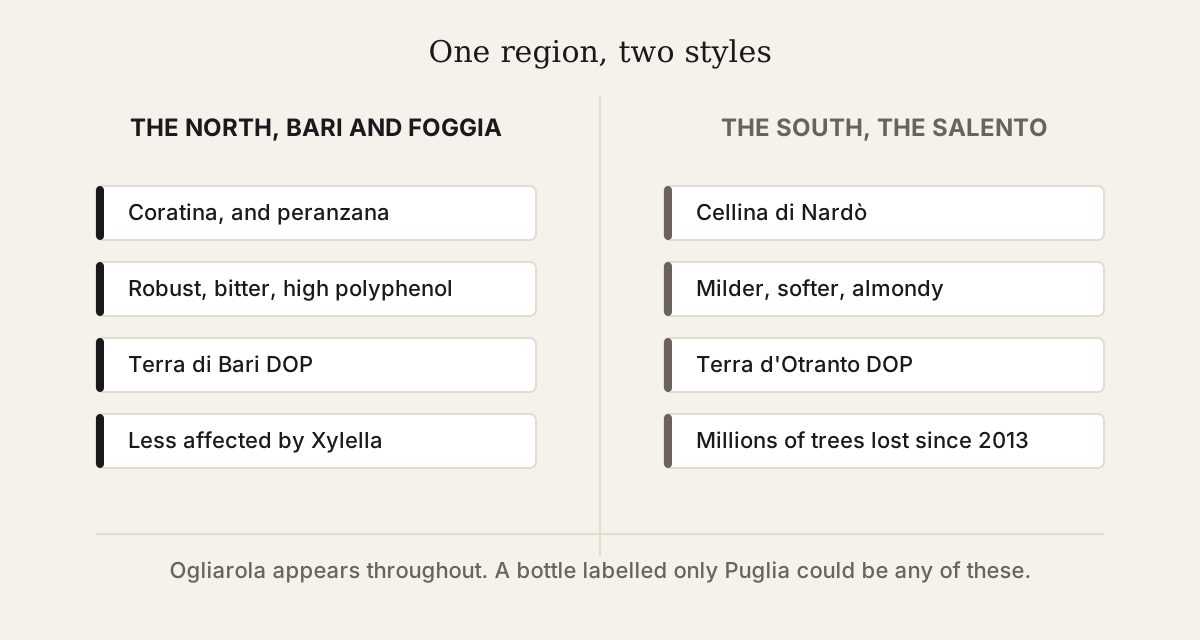
Puglia is not one style, and the dominant cultivar changes as you move down the region.
Coratina dominates the north around Bari and Andria, and it is one of the highest-polyphenol olives grown anywhere.
Ogliarola appears throughout and gives a softer, more almondy oil.
Cellina di Nardò is southern, in the Salento, and yields a milder oil.
Peranzana is from the Foggia area in the far north, delicate and fruity.
A bottle labelled only Puglia could be any of these, which is why the cultivar matters more here than the region does.
The Xylella outbreak
Xylella fastidiosa, a bacterial pathogen, has killed millions of olive trees in the Salento since 2013 and has reshaped the southern part of the region.
The bacterium blocks the tree’s water transport, causing rapid desiccation.
It arrived in the Salento around 2013 and spread north.
Millions of trees have died, including many centuries-old ones, and the landscape of parts of the province of Lecce has changed permanently.
Containment involves removing infected trees and replanting with resistant cultivars such as leccino and favolosa.
Southern Pugliese production has fallen substantially as a result, and the northern coratina areas were less affected.
This is a reportable agricultural fact rather than something this site assesses scientifically.
What to look for
Buy on cultivar and harvest date rather than on the regional name, since Puglia covers too many styles to be a guide.
A stated cultivar is the useful signal. Coratina for robust, ogliarola or peranzana for gentler.
Terra di Bari DOP covers the northern coratina area and is the best-known Pugliese designation.
Terra d’Otranto DOP and Dauno DOP cover other parts of the region.
Checked on 13 August 2026, United States listings for Pugliese extra virgin olive oil clustered between roughly twelve and forty dollars per 500 millilitres, below comparable Tuscan oils. Counting rule: a listing counts when it is an imported Italian oil naming Puglia or a Pugliese DOP. That describes what was visible on that date and is not a recommendation of any seller.
Puglia is generally better value than Tuscany for equivalent quality, because the name carries less premium.
What to use it for
Match the use to the cultivar rather than to the region.
Northern coratina oils suit grilled meat, bean dishes and anything that can take bitterness.
Southern and Foggia oils suit fish, vegetables and raw dressings.
All of them finish better than they fry.
Pugliese oil is the everyday cooking oil of southern Italy, and using a mild one in the pan is entirely normal in the region.
Frequently asked questions
Is Puglia olive oil good?
Puglia produces some of Italy’s best oil and also a great deal of bulk oil, so the regional name alone is not a quality signal. Buying on cultivar and harvest date is far more informative. Coratina from the north is among the most robust and highest-polyphenol oil made anywhere in Italy.
Why is Puglia oil cheaper than Tuscan?
Because the terrain permits mechanical harvesting at scale, production volumes are far larger, and the Puglia name carries less of a price premium than the Tuscan one. The cost difference reflects agriculture and marketing rather than a difference in achievable quality.
What is Xylella and what did it do to Puglia?
Xylella fastidiosa is a bacterial pathogen that blocks water transport in the olive tree and kills it. It arrived in the Salento around 2013 and has since killed millions of trees, including centuries-old ones, permanently changing parts of the province of Lecce. Containment involves removing infected trees and replanting resistant cultivars.
Which Puglia cultivar should I buy?
Coratina for a robust, bitter, high-polyphenol oil suited to grilled meat and beans. Ogliarola or peranzana for something gentler that suits fish and vegetables. Cellina di Nardò is milder still. The cultivar tells you far more about how the oil will taste than the word Puglia does.
Does bulk Puglia oil end up in other regions’ bottles?
A substantial share of Pugliese production is sold in bulk to bottlers elsewhere, which is legal and ordinary. Where the resulting bottle claims a different regional origin rather than simply being bottled elsewhere, that crosses into the origin misdeclaration covered on this site’s page about olive oil adulteration.
CalItalia Food covers Italian ingredients: what they are, how to tell a good one from an ordinary one, and where to buy them in the United States.