
Coratina Olive Oil: One of the Most Polyphenol-Rich Oils Made
The Pugliese cultivar behind Italy's most robust oils. What coratina tastes of, why the numbers run so high, how to buy it, and how to use an oil this bitter.
Coratina is a Pugliese olive cultivar producing one of the highest-polyphenol oils grown anywhere, intensely bitter and pungent with a long green finish. It sits at the robust end of the Italian oils worth learning to judge.
It is the oil people buy on purpose for the compounds and the oil people buy by accident and find undrinkable.
What coratina is
Coratina is an olive cultivar centred on the province of Bari in northern Puglia, particularly around the town of Corato from which it takes its name.
It is grown principally in the Terra di Bari area, which has its own DOP.
The tree is vigorous and productive, and the fruit is medium-sized with a high oil content.
It is harvested early, in October and November, which pushes the polyphenol content higher still.
It is grown outside Italy too, notably in Australia and California, where it is valued for the same properties.
Why the numbers run so high
Coratina is naturally high in oleuropein and related compounds, and early harvesting compounds the effect.
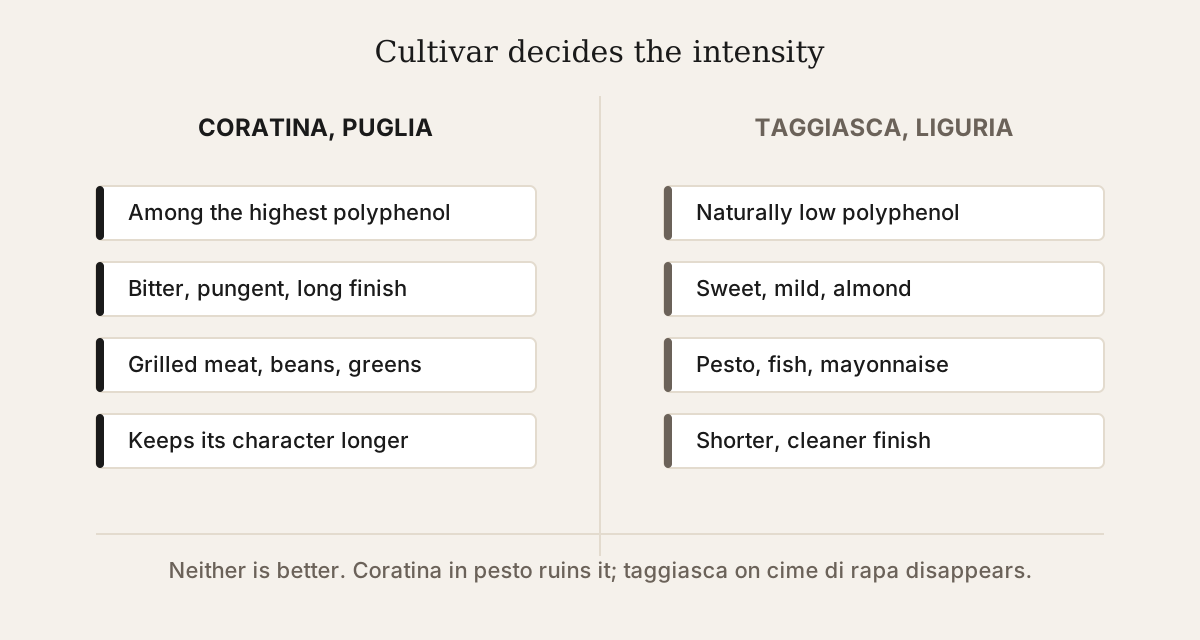
Polyphenol figures for coratina commonly exceed 500 milligrams per kilogram and can run considerably higher in early-harvest oil, where many commercial oils sit below 200.
Oleuropein derivatives carry the bitterness.
Oleocanthal carries the throat pepper, and coratina delivers it forcefully.
High polyphenol content also extends shelf life, since the compounds are antioxidants that protect the oil itself.
Coratina keeps its character longer than a mild oil, which is a practical advantage for anyone who uses oil slowly.
What it tastes of
Coratina is aggressively bitter and pungent, with green almond, artichoke and grass, and a finish that lasts.
Bitterness arrives first and is pronounced.
Pepper follows at the back of the throat and often provokes a cough.
Green almond and artichoke are the notes named most consistently.
The finish is long, which is unusual and is part of what people pay for.
It is not a subtle oil and is not intended to be.
What to do with it
Coratina belongs on food robust enough to absorb it, and it overwhelms anything delicate.
Grilled and roasted meat, where the bitterness cuts fat.
Bean and lentil soups, poured on at the table.
Bitter greens, cime di rapa above all, which is the Pugliese pairing.
Bruschetta with strong toppings.
Not in pesto, not in mayonnaise, not on fish. In each case coratina takes the dish over.
Blend it with a milder oil if you like the compounds and not the intensity, which is what many commercial blends do.
Buying it
Look for a stated polyphenol figure and an early harvest date, since this is the cultivar where both are most likely to be printed.
Producers of coratina often print polyphenol content, because the number is a selling point.
Above 500 milligrams per kilogram is high, and some early-harvest coratina exceeds 800.
Terra di Bari DOP covers the heartland.
Checked on 13 August 2026, United States listings for monocultivar coratina extra virgin olive oil clustered between roughly eighteen and fifty dollars per 500 millilitres. Counting rule: a listing counts when it is an imported oil naming coratina as the cultivar. That describes what was visible on that date and is not a recommendation of any seller.
Monocultivar labelling is common for coratina, which makes it easier to buy deliberately than most Italian oils.
Frequently asked questions
Why is coratina olive oil so bitter?
Coratina is naturally high in oleuropein and related phenolic compounds, and it is typically harvested early in October and November when those compounds are at their peak. Both the cultivar and the harvest timing push in the same direction, so the bitterness is intrinsic rather than a fault or a sign of poor processing.
Is coratina the healthiest olive oil?
Coratina is among the highest-polyphenol oils commercially available, and polyphenols are the compounds the European Union health claim concerns. Whether that makes it healthiest is a question this site does not evaluate, and the practical point is that an oil so bitter it goes unused delivers nothing at all.
How do I use an oil this strong?
Put it on food robust enough to take it: grilled meat, bean and lentil soups, bitter greens like cime di rapa, and bruschetta with strong toppings. Keep it away from fish, mayonnaise and pesto, where it dominates. Blending it with a milder oil is a legitimate approach and is what many commercial blends do.
Does coratina oil last longer?
Coratina keeps its character noticeably longer than a mild oil, because polyphenols are antioxidants that protect the oil from its own oxidation. That is a genuine practical advantage for anyone who buys a bottle and uses it slowly, though it does not exempt the oil from the usual rules about heat and light.
Is coratina only grown in Puglia?
Coratina originates in the province of Bari in northern Puglia and is now grown commercially elsewhere, including in Australia, California and South America, where growers value the same high-polyphenol characteristics. An oil labelled coratina is a statement about the cultivar rather than about Italian origin.
CalItalia Food covers Italian ingredients: what they are, how to tell a good one from an ordinary one, and where to buy them in the United States.