
Olive Oil Adulteration: What Is Actually Going On
The fraud is real and it is mostly not what the headlines say. The three actual practices, what the studies found, and what to judge on the label before you buy.
Olive oil fraud is real, well documented and prosecuted, and it is mostly not the seed-oil substitution that popular accounts describe. It is the olive oil version of the distance between an authentic product and what is sold as one.
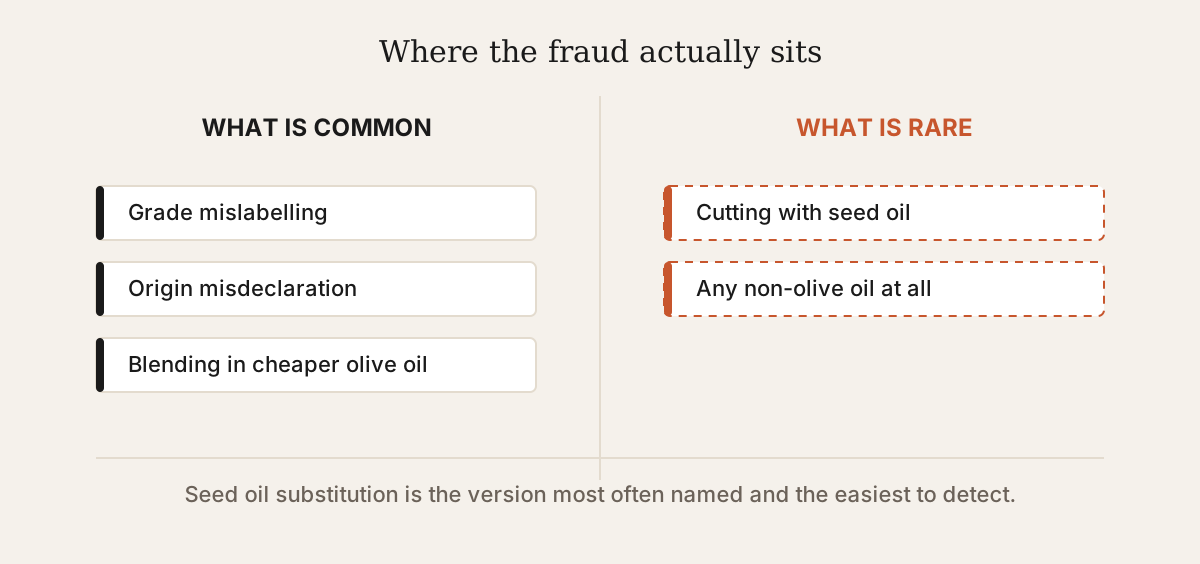
The common practices are mislabelling lower grades as extra virgin, misdeclaring origin, and blending in cheaper olive oil from elsewhere. Cutting with hazelnut or soybean oil happens and is the rarest of the four.
The three common practices
Most olive oil fraud is a labelling offence rather than a substitution one.
Grade mislabelling is the most common: oil that fails the extra virgin sensory panel is sold as extra virgin anyway. The oil is olive oil, and the grade claim is false.
Origin misdeclaration is the second: oil pressed from Tunisian, Greek or Spanish olives bottled in Italy and presented as Italian. Bottled in Italy is not the same claim as produced from Italian olives, and the label wording carries the difference.
Cross-blending is the third: cheaper olive oil from a bulk market blended into a bottle presented as a single origin or estate oil.
Seed oil substitution is the rarest, being the easiest to detect chemically and carrying the heaviest penalties.
All four are illegal in the European Union, and enforcement varies.
What the studies actually found
The widely cited figures come from a small number of studies and are frequently repeated without their limits.
The most cited is a University of California, Davis study of 2010, which reported that a majority of imported extra virgin samples sold in California failed the sensory or chemical standards for the grade.
Its sample was small and it was funded in part by domestic producers, and both facts belong beside the finding.
Failure on the sensory panel is the usual result rather than evidence of seed oil, which is the part that most retellings drop.
Italian prosecutions have concerned grade and origin far more often than adulteration with non-olive oil.
The honest summary is that a meaningful proportion of oil sold as extra virgin is not extra virgin by the legal definition, and that this is a different and less lurid claim than the one usually made.
The tests that do not work
Two widely shared home tests do not distinguish real from fake olive oil.
The refrigerator test does not work. Olive oil solidifies at cold temperatures and so do several other oils, and the point at which it does depends on the fatty acid profile, which varies by cultivar and harvest. A real oil may stay liquid and an adulterated one may cloud.
The burning-a-wick test does not work. Most vegetable oils will sustain a wick.
Neither test appears in any laboratory standard, which is the practical reason to distrust them.
The tests that do work are gas chromatography for fatty acid and sterol profiles, and a trained sensory panel, and neither is available to a shopper.
What a buyer can actually do
Since the laboratory tests are out of reach, the useful signals are all on the label and in the mouth.
Look for a harvest date. Fraudulent bottlers rarely commit to one.
Look for a specific origin, a region, an estate or a mill, rather than a country.
Read the origin statement carefully. Packed in Italy, bottled in Italy and product of Italy are different claims, and blends of European Union oils must say so.
Prefer dark glass or tin.
Taste it. Real fresh extra virgin is bitter and peppery, with a catch at the back of the throat. Oil that tastes of nothing is either old or not what it claims.
Buy from producers who publish detail, since transparency is expensive to fake at scale.
What the protected designations do and do not cover
DOP and IGP designations constrain origin and method and are not a blanket guarantee of quality.
DOP requires the olives to be grown, pressed and bottled within a defined area to a specified method.
IGP is looser, requiring only one stage of production in the area.
Both are audited, which makes origin fraud considerably harder than on an unprotected bottle.
Neither guarantees the oil is good. A DOP oil can be dull, and an excellent oil can carry no designation at all.
They raise the floor rather than certify the ceiling, which is the same thing this site says about protected designations on cheese and cured meat.
Frequently asked questions
Is most olive oil fake?
Most olive oil sold as extra virgin is olive oil. The common frauds are labelling offences: selling a lower grade as extra virgin, misdeclaring the origin, or blending in cheaper oil from elsewhere. Substitution with seed oil is the rarest of the practices because it is the easiest to detect chemically.
Does the refrigerator test work?
No. Olive oil solidifies when cold and so do other oils, and the temperature at which it happens varies with cultivar and harvest, so a genuine oil may stay liquid and an adulterated one may cloud. The test appears in no laboratory standard and cannot distinguish real oil from fake.
What does the UC Davis study actually show?
The 2010 study reported that a majority of imported extra virgin samples sold in California failed the sensory or chemical standards for that grade. The sample was small and the funding included domestic producer interests, and the failures were largely sensory rather than evidence of non-olive oil. It shows a grade problem rather than a substitution problem.
Does DOP guarantee the oil is good?
No. DOP and IGP constrain where the olives were grown and how the oil was made, and they are audited, which makes origin fraud much harder. They do not assess whether the finished oil tastes good. A DOP oil can be dull and an outstanding oil can carry no designation.
How can I tell if my olive oil is real?
Not with certainty at home, since the reliable methods are laboratory chromatography and trained sensory panels. What a buyer can do is check for a harvest date and a specific origin, prefer dark glass or tin, read the origin statement precisely, and taste for the bitterness and peppery catch that fresh extra virgin has and old or fraudulent oil does not.
CalItalia Food covers Italian ingredients: what they are, how to tell a good one from an ordinary one, and where to buy them in the United States.