Tuscan Olive Oil: Green, Bitter, and Picked Early
The style Tuscany is known for, the cultivars behind it, what the IGP covers, why a genuine Tuscan oil tastes aggressive rather than smooth, and how to buy and use it.
Tuscan olive oil is the green, grassy, assertively bitter style produced from early-harvested frantoio, moraiolo and leccino olives across central Tuscany. Its reputation makes it one of the Italian names worth checking behind the label.
The aggression is the style rather than a fault, and an oil sold as Tuscan that tastes mild and buttery is either late-harvested or not Tuscan.
What defines the Tuscan style
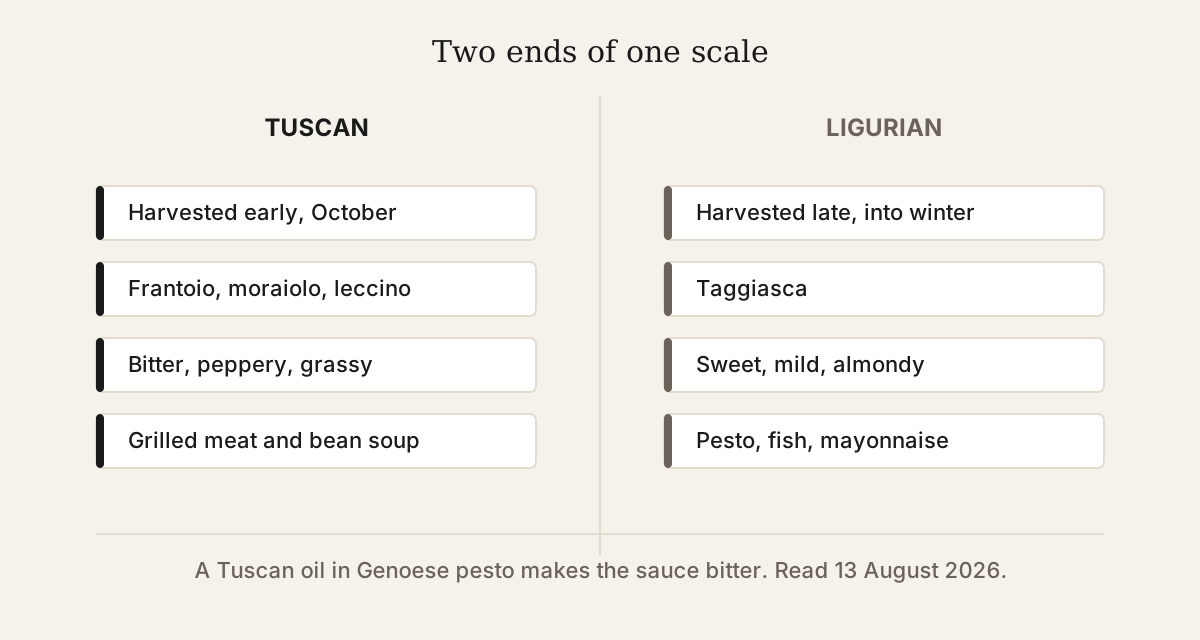
Tuscan oil is defined by early harvesting and by a cultivar mix that runs to bitterness and pungency rather than sweetness.
Harvesting begins in October while much of the fruit is still green, which is earlier than most Italian regions.
Green fruit yields less oil and far more polyphenol, which is the trade the region makes deliberately.
The taste is grassy and herbaceous, with artichoke and green tomato notes commonly named.
Bitterness on the tongue and pepper at the throat are both expected and pronounced.
Colour runs deep green, though colour alone is a poor guide since it depends on filtration as much as on fruit.
The three cultivars
Tuscan oil is usually a blend, and three varieties do most of the work.
Frantoio is the backbone, giving structure, a fruity green character and good keeping quality.
Moraiolo supplies the bitterness and the pungency, and it is naturally high in polyphenols.
Leccino softens the blend, being milder and rounder, and it ripens earlier than the other two.
Pendolino appears in many groves as a pollinator and contributes little to the oil.
The proportions vary by estate, and a producer stating them is telling you something useful about the style to expect.
What Toscano IGP covers
Toscano IGP is a protected geographical indication covering oil produced from olives grown and pressed in Tuscany to a defined standard.
It requires the olives to be grown in Tuscany and pressed within the region.
It sets a maximum free acidity of 0.5 percent, stricter than the 0.8 percent extra virgin limit.
It requires a sensory panel assessment.
It permits a set of authorised cultivars, of which frantoio, moraiolo and leccino are the principal ones.
Sub-designations exist, including Colline Lucchesi, Colline di Firenze and Montalbano, which narrow the area further.
Chianti Classico DOP is a separate and stricter designation covering the same territory as the wine zone.
Why it costs what it does
Tuscan oil carries a premium built from lower yield, higher labour and the value of the name.
Early harvesting reduces yield substantially, since green fruit contains less oil.
Hand harvesting is common on the steeper hillside groves where machinery cannot work.
The Tuscan name commands a premium independent of the oil in the bottle, which is precisely why origin fraud concentrates here.
Checked on 13 August 2026, United States listings for IGP or DOP Tuscan extra virgin olive oil clustered between roughly twenty and sixty dollars per 500 millilitres. Counting rule: a listing counts when it is an imported Italian oil carrying a Tuscan IGP or DOP designation. That describes what was visible on that date and is not a recommendation of any seller.
Bottled in Tuscany is not the same claim as produced from Tuscan olives, and the label wording carries the difference.
What to use it for
Tuscan oil is a finishing oil, and using it as a cooking fat wastes what you paid for.
Over grilled meat and bistecca, which is its home use.
On soups, particularly ribollita and bean soups, poured on at the table.
On bread, with nothing else, which is the regional test.
On white beans and boiled greens, where the bitterness balances the starch.
Not for frying. Heat destroys the polyphenols and the aromatics that justify the price.
Frequently asked questions
Why is Tuscan olive oil so bitter?
Tuscan producers harvest early, in October, while much of the fruit is still green, and green fruit carries far more polyphenol than ripe fruit. Moraiolo, one of the three principal cultivars, is naturally high in those compounds. The bitterness and the peppery catch are the intended style rather than a defect.
What is the difference between Toscano IGP and Chianti Classico DOP?
Toscano IGP covers oil from olives grown and pressed anywhere in Tuscany to a defined standard including a 0.5 percent acidity maximum. Chianti Classico DOP is narrower and stricter, covering the same territory as the Chianti Classico wine zone with tighter requirements. DOP is the more restrictive designation of the two.
Is Tuscan olive oil worth the price?
It carries a genuine cost premium from early harvesting, lower yield and hillside hand-harvesting, and it also carries a name premium that the oil itself does not always justify. A well-made oil from Puglia or Sicily at half the price can be excellent. The Tuscan style is distinctive, and paying for the region alone is a poor way to buy oil.
Can I cook with Tuscan olive oil?
Cooking with it is wasteful rather than wrong. Heat degrades the polyphenols and volatile aromatics that make an early-harvest Tuscan oil distinctive and expensive, so the qualities you paid for are largely gone by the time the dish is served. Use a cheaper oil for the pan and this one at the table.
Does dark green colour mean better oil?
Colour is a poor guide. It depends on cultivar, harvest timing and whether the oil was filtered, and professional tasting glasses are deliberately coloured blue so that appearance cannot influence the judgement. Bitterness and a peppery catch in the mouth are far more informative than what the oil looks like.
CalItalia Food covers Italian ingredients: what they are, how to tell a good one from an ordinary one, and where to buy them in the United States.