
Garlic Infused Olive Oil: The Botulism Risk Nobody Mentions
Commercial garlic oil is acidified for a reason. What the hazard actually is, why homemade garlic oil is different, how to make it safely, and how to buy and use it.
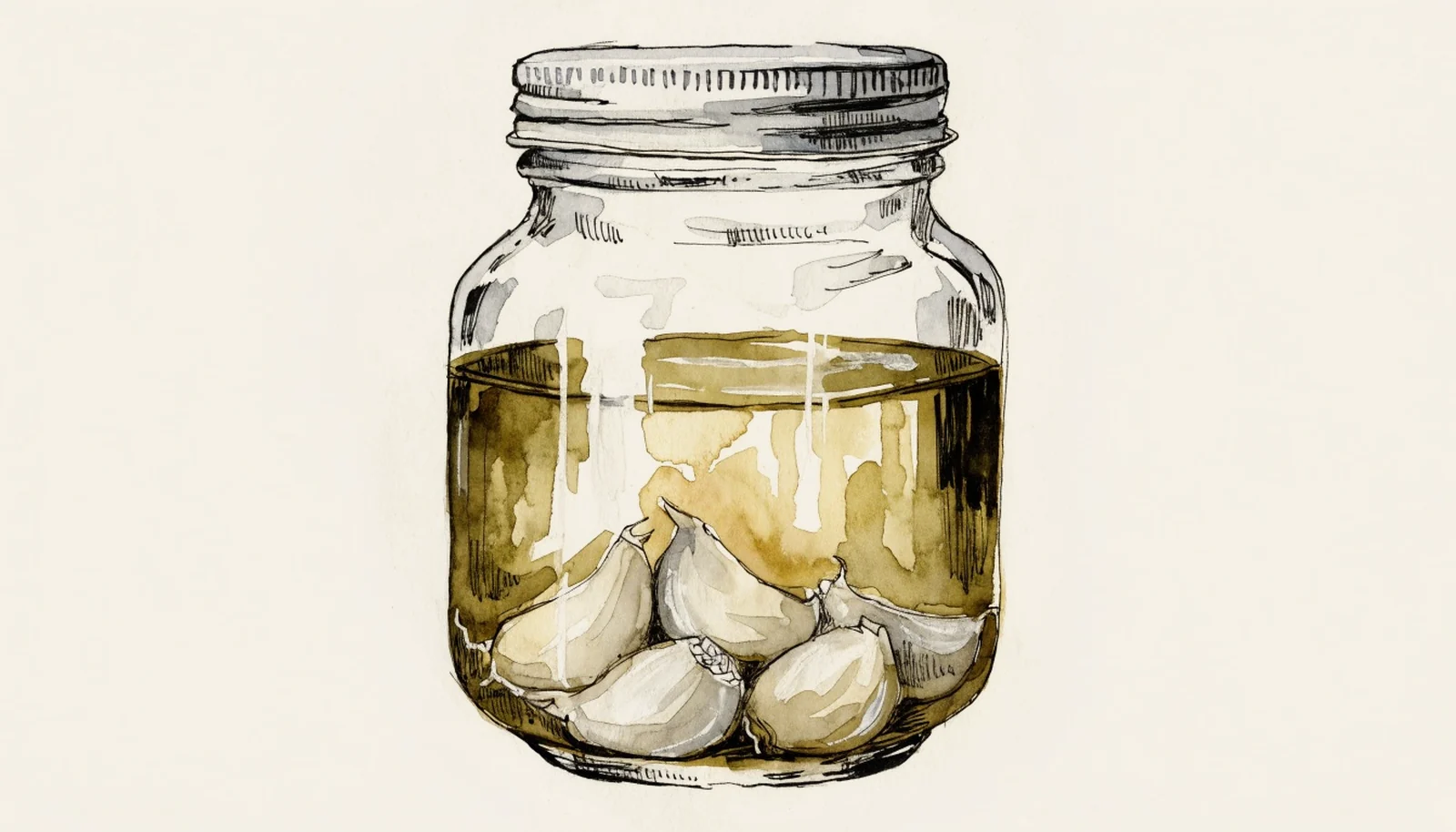
Garlic infused olive oil is olive oil that has taken up garlic flavour, sold commercially or made at home, and the homemade version carries a genuine botulism risk that the commercial version is formulated to avoid. Reading the bottle is part of judging any Italian pantry staple, and here it is a safety question as well.
That is the first thing to say about it, because most recipes for it online do not say it at all.
The hazard, stated plainly
Fresh garlic in oil at room temperature can support the growth of Clostridium botulinum, and the resulting toxin causes botulism.
The bacterium is anaerobic, meaning it grows without oxygen, and oil excludes oxygen completely.
Garlic is a low-acid vegetable that can carry the spores from the soil.
Room temperature oil provides the remaining condition for the spores to germinate and produce toxin.
The toxin is odourless and tasteless and is not detectable by looking at or smelling the oil.
United States food safety agencies have issued repeated guidance on this specific preparation, which is why commercial products are formulated the way they are.
This site reports the guidance and is not a food safety authority. Anyone with a specific question should consult one.
How commercial garlic oil avoids it
Commercially produced garlic oil is either acidified, or flavoured without fresh garlic in the bottle.
Acidification with phosphoric or citric acid lowers the pH below the level at which the bacterium can grow.
Many commercial oils contain no garlic solids at all, being flavoured with garlic extract or essential oil.
Some are made from dried garlic, which lacks the water activity the bacterium needs.
The label usually indicates which, and an ingredient list showing acid or extract rather than garlic cloves tells you it has been addressed.
A commercial bottle with visible garlic cloves floating in it should state that it is acidified, and if it does not, that is worth questioning.
Making it safely at home
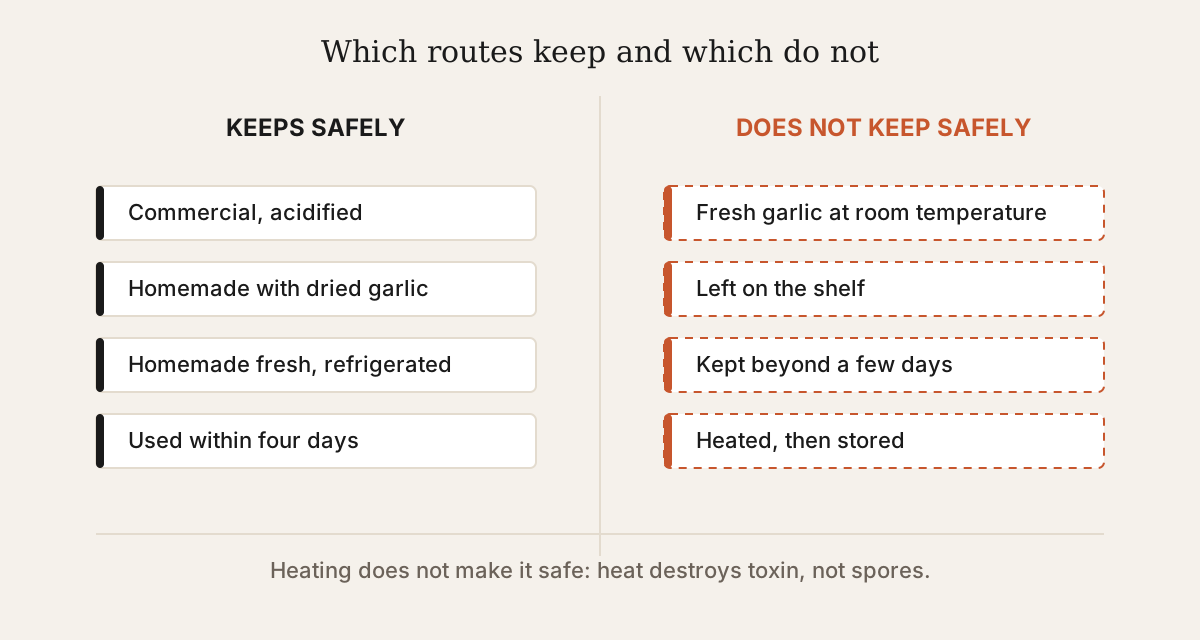
Homemade garlic oil is safe when it is refrigerated and used quickly, or when the garlic is dried rather than fresh.
Refrigerate immediately after making it.
Use within four days, which is the figure United States guidance commonly gives for refrigerated garlic in oil.
Do not store it at room temperature at all, regardless of how it looks or smells.
Do not can it or preserve it without a tested acidification procedure.
Using dried garlic instead of fresh avoids the water activity that the bacterium needs, and is the route to a shelf-stable homemade oil. The same dried-against-fresh rule applies to herb infused olive oil.
Heating the oil does not make it safe. Botulinum toxin is destroyed by sustained boiling, and spores are not, so an infusion warmed and then stored is not protected.
How to make it, given all that
Warm the oil gently with garlic, strain it completely, refrigerate and use within days.
Warm rather than fry. Around 60 to 80 degrees Celsius for fifteen to twenty minutes extracts flavour without frying the garlic bitter.
Strain out every solid. Removing the garlic reduces the risk and improves keeping quality either way.
Cool quickly and refrigerate.
Label it with the date, since four days is short and easy to lose track of.
Make small quantities. There is no advantage to a large batch you cannot use.
What to use it for
Garlic oil suits finishing and dressing where you want garlic flavour without garlic texture.
Drizzled over pizza after baking, which is its most common use.
In dressings and marinades.
Over grilled vegetables and bread.
Brushed on bruschetta rather than rubbing a raw clove.
It is not a cooking oil for garlic dishes. Where a recipe wants cooked garlic, use garlic.
Buying it
Commercial garlic oil is widely available and the ingredient list tells you how it was made.
Read for acid. Citric or phosphoric acid indicates an acidified product.
Read for extract. Garlic extract or flavour indicates no fresh garlic solids.
Checked on 13 August 2026, United States listings for garlic infused olive oil clustered between roughly ten and thirty dollars per 250 to 500 millilitres. Counting rule: a listing counts when it is an olive oil sold as garlic infused. That describes what was visible on that date and is not a recommendation of any seller.
Quality of the base oil varies widely, and infused oils are frequently made with refined or low-grade oil, since the garlic masks it. Calabrian chilli oil raises the same base-oil question.
An infused oil made from good extra virgin will say so and will cost accordingly.
Storage
Commercial acidified garlic oil keeps as labelled; homemade keeps four days refrigerated and no time at all at room temperature.
Follow the label on a commercial bottle.
Refrigerate homemade oil immediately and discard after four days.
Cloudiness in the refrigerator is normal for any olive oil and resolves at room temperature.
When in doubt, discard it. The toxin cannot be detected by smell, taste or appearance.
Frequently asked questions
Is homemade garlic oil dangerous?
Homemade garlic oil made with fresh garlic and stored at room temperature can support Clostridium botulinum, which produces a toxin that causes botulism. The risk is real and United States agencies have issued specific guidance on it. Refrigerating the oil and using it within about four days addresses it, as does using dried garlic instead of fresh.
Why is commercial garlic oil safe?
Commercial garlic oils are either acidified with citric or phosphoric acid to lower the pH below the level at which the bacterium can grow, or they are flavoured with garlic extract rather than containing fresh garlic solids, or they use dried garlic. The ingredient list generally shows which approach was taken.
Can I make garlic oil shelf stable at home?
Not with fresh garlic and without a tested acidification procedure. Using dried garlic avoids the water activity the bacterium requires and is the practical home route to a keeping oil. Heating the oil does not make it safe, because heat destroys toxin but not spores.
How long does homemade garlic oil last?
About four days refrigerated, which is the figure United States food safety guidance commonly gives for garlic in oil. At room temperature it should not be stored at all. Making small batches is the sensible approach, since there is no advantage to a quantity you cannot finish inside the window.
Does good extra virgin oil get used for infusions?
Frequently not. Infused oils are often made with refined or low-grade oil because the added flavour masks the base, which is why an infused oil can cost less than a plain extra virgin of any quality. Producers using good extra virgin as the base say so on the label and charge for it.
CalItalia Food covers Italian ingredients: what they are, how to tell a good one from an ordinary one, and where to buy them in the United States.