
Olive Oil Harvest Date: The Number That Actually Matters
Best-before dates tell you almost nothing. What a harvest date is, why producers omit it, what to buy, and how to judge that an oil is old without one.
The harvest date is the single most useful piece of information on a bottle of olive oil, and most bottles do not carry it. Reading it is a large part of telling a good Italian oil from a tired one.
Olive oil does not improve with age. It is at its best within the first year of pressing and declines steadily after, which is why the pressing date matters far more than the printed expiry.
Why the harvest date matters
Olive oil is a fruit juice that degrades from the moment it is pressed, and its age is the strongest single predictor of how it will taste. That makes it a better guide than the acidity figure.
It is at its best in the first months after pressing, when the polyphenols and volatile aromatics are highest.
It declines steadily thereafter, losing bitterness, pungency and aroma before it becomes obviously rancid.
Eighteen months is a reasonable working limit for an oil stored well, and less for one stored badly.
Unlike wine, it does not develop. There is no upside to age in olive oil at any price point.
What a best-before date does not tell you
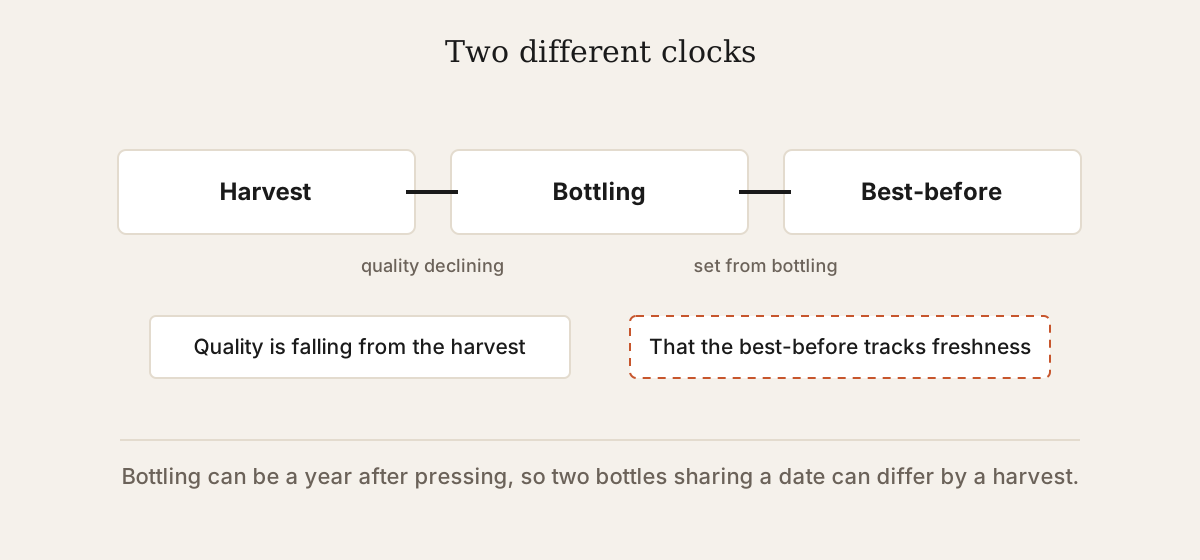
A best-before date is set by the bottler from the bottling date, not the harvest, and the gap between the two can be a year or more.
Bottling can happen long after pressing. Oil is commonly stored in bulk in stainless tanks and bottled to order.
A two-year best-before printed on a bottle filled eighteen months after harvest describes an oil that was already old when it was sealed.
The date is a legal requirement and it is a shelf-life estimate rather than a quality statement.
Two bottles with the same best-before can differ by a full harvest year.
How to read the northern hemisphere harvest
Italian, Spanish and Greek olives are harvested in autumn, so the harvest year runs across the turn of the calendar.
The northern hemisphere harvest runs roughly October to January.
Labels often read as a range, such as 2025/26, which is the correct way to express it.
Early harvest oils are pressed in October and November from greener fruit, and they are more bitter, more pungent and higher in polyphenols.
Late harvest oils are pressed from riper fruit and are milder, sweeter and lower in polyphenols.
Southern hemisphere oil, from Australia, Chile and South Africa, is harvested around April to June, which makes it the fresher option in the northern summer.
When there is no harvest date
Where the bottle omits the harvest, several other signals narrow it down.
Look for a lot number with a date embedded, which some producers use.
Check the best-before and subtract. Most Italian producers set eighteen months to two years from bottling, so a best-before in mid 2027 suggests bottling in mid 2025 at the earliest.
Dark glass or tin is a sign the producer cares, and producers who care usually print the harvest.
Clear glass on a shelf under lights is a bad sign independent of any date.
Taste for it. A tired oil is flat and slightly waxy, with no pepper at the back of the throat and no grassy or green aroma.
Buying with the date in mind
Buy the most recent harvest available, in the smallest quantity you will use quickly, in dark packaging. Which sellers are likely to have recent stock is covered in where to buy Italian ingredients.
Buy the current harvest year where the label states it.
Prefer tins or dark glass, since light degrades oil faster than time alone.
Buy small. A large tin bought for value is a false economy if it takes eight months to finish.
Checked on 13 August 2026, United States listings for imported Italian extra virgin olive oil frequently omitted a harvest date and carried a best-before instead. Counting rule: a listing counts as stating a harvest when a harvest year or pressing date appears in the product description or on the pictured label. That describes what was visible on that date and is not a recommendation of any seller.
Producers who print it are telling you something, and the willingness to print it is itself a signal.
Storage once you have it
Heat and light are what destroy olive oil, and the bottle beside the stove is the most common mistake.
Keep it in a dark cupboard away from the hob.
Do not refrigerate it. Cold causes cloudiness and solidification, which is reversible and pointless.
Close it properly. Oxygen in the headspace is the third enemy after heat and light.
Decant from a large tin into a small dark bottle for daily use and keep the tin sealed.
Frequently asked questions
How long does olive oil last?
At its best within a year of pressing, and reasonable up to about eighteen months if stored well in a dark, cool place. It does not spoil dangerously; it goes flat and eventually rancid, losing the peppery bitterness and green aroma that made it worth buying. Ageing never improves it.
What is the difference between a harvest date and a best-before date?
The harvest date is when the olives were pressed. The best-before is calculated by the bottler from the bottling date, which can be a year or more after pressing. Two bottles carrying the same best-before can be a full harvest year apart, which is why the harvest date is the more informative of the two.
Is early harvest olive oil better?
Early harvest oil is greener, more bitter and more pungent, with higher polyphenol content, and it is not universally better. Late harvest oil is milder and sweeter and suits different food. The choice is a matter of use and preference, and early harvest oils generally cost more and keep their character longer.
Should I buy southern hemisphere olive oil?
In the northern summer it is often the fresher option, since Australian, Chilean and South African oil is harvested around April to June. An Australian oil pressed in May will be considerably fresher in August than an Italian oil pressed the previous November, and freshness matters more than origin.
Why do most bottles not show a harvest date?
Because it is not legally required and it can only help producers with recent oil. Bulk oil is frequently stored in tanks and bottled to order, so printing the harvest would reveal a gap the bottler would rather not advertise. Producers who print it are making a claim they are prepared to stand behind.
CalItalia Food covers Italian ingredients: what they are, how to tell a good one from an ordinary one, and where to buy them in the United States.