
Herb Infused Olive Oil: What Works, What Does Not, and What Is Risky
Dried herbs infuse safely and fresh ones carry the same hazard as garlic. Which herbs give up flavour to oil, how to make an infusion worth having, and how to judge a bottle before you buy.
Herb infused olive oil is oil that has taken up flavour from herbs, and the useful distinction is between dried herbs, which infuse safely and keep, and fresh herbs, which carry the same botulism hazard as fresh garlic. It is one of the pantry oils best judged by their ingredient list.
The second useful distinction is that some herbs give up their flavour to oil readily and others give up almost nothing.
Which herbs actually infuse
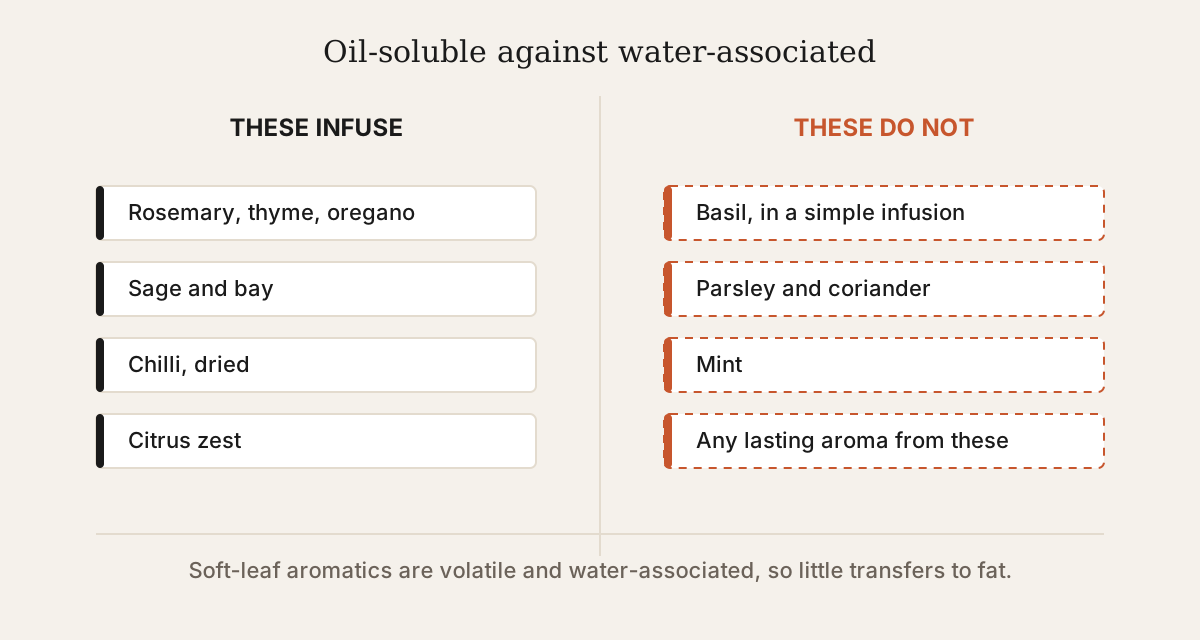
Resinous woody herbs give up flavour to oil well; soft-leaved herbs largely do not.
Rosemary, thyme, oregano, sage and bay infuse readily, because their aromatic compounds are oil-soluble and concentrated in resins.
Chilli infuses well for the same reason, capsaicin being fat-soluble.
Basil, parsley, coriander and mint infuse poorly. Their aromatics are volatile and water-associated, and what transfers to oil is thin and fades within days.
Basil oil made by blending and straining is a different technique from infusion, and it is a fresh preparation with a very short life.
Lemon and orange zest infuse well, the oils sitting in the peel.
The safety line
Dried herbs are safe in oil at room temperature; fresh herbs are not, for the same reason fresh garlic is not.
Fresh herbs carry water and soil-borne spores, which is the combination Clostridium botulinum needs in an oxygen-free environment.
Dried herbs lack the water activity required and are the standard route to a shelf-stable infused oil.
Fresh herb oil must be refrigerated and used within days, on the same basis as garlic oil.
United States food safety guidance covers this specifically, and this site reports it rather than acting as an authority on it.
Heating does not resolve it, since spores survive temperatures that destroy toxin.
Making a dried herb infusion
Warm dried herbs gently in oil, steep, then strain completely.
Use thoroughly dried herbs, commercially dried or home-dried to brittleness.
Warm the oil to around 60 to 80 degrees Celsius with the herbs in it, for twenty to thirty minutes.
Do not fry them. Herbs that darken and crisp turn the oil bitter.
Steep off the heat for an hour or more, or leave overnight for a stronger result.
Strain through muslin so no plant material remains.
Bottle in dark glass and keep it cool.
Making a fresh herb oil
Fresh herb oil is a bright green preparation made by blanching, blending and straining, and it is a short-life fresh product.
Blanch the herb briefly in boiling water, then plunge into iced water. This fixes the colour.
Squeeze out all the water, which matters both for flavour and for keeping.
Blend with oil, then strain through muslin without pressing, which keeps it clear.
Refrigerate and use within a few days.
Do not store it at room temperature, on the same basis as any fresh plant material in oil.
What to use them for
Infused oils are finishing oils, and they belong on food rather than in the pan.
Rosemary oil on potatoes, focaccia and roast meat.
Chilli oil on pizza and pasta.
Lemon oil on fish and vegetables.
Basil oil as a plate garnish, where its colour is much of the point.
Heat destroys the infusion you went to the trouble of making, so cooking with them is self-defeating.
Buying them
Commercial infused oils vary enormously in whether they contain real herbs and in the quality of the base oil.
Read the ingredient list. Natural flavour or extract means no actual herb infusion.
Look at the base oil. Many infused oils use refined or low-grade oil because the flavour masks it.
Checked on 13 August 2026, United States listings for herb infused olive oil clustered between roughly nine and twenty-eight dollars per 250 to 500 millilitres. Counting rule: a listing counts when it is an olive oil sold as herb infused. That describes what was visible on that date and is not a recommendation of any seller.
Bottles with whole herbs visible should be shelf-stable by formulation and are frequently decorative, so the ingredient list matters more than the appearance.
An infusion made from good extra virgin costs more and generally says so.
Frequently asked questions
Which herbs work best in infused oil?
Resinous woody herbs work best: rosemary, thyme, oregano, sage and bay all give up their aromatic compounds to oil readily. Chilli works for the same reason. Soft-leaved herbs like basil, parsley and mint infuse poorly, because their aromatics are volatile and do not transfer well to fat.
Is fresh herb oil dangerous?
Fresh herbs in oil carry the same hazard as fresh garlic, since they bring water and potentially soil-borne Clostridium botulinum spores into an oxygen-free environment. Refrigerating the oil and using it within a few days addresses it. Dried herbs lack the water activity the bacterium needs and are the route to a keeping oil.
Why does my basil oil taste of nothing?
Basil aromatics are volatile and water-associated rather than oil-soluble, so a straightforward infusion extracts very little. The technique that works for basil is blanching, blending with oil and straining, which produces a bright green fresh preparation rather than an infusion, and it keeps only a few days.
Can I cook with infused oil?
Cooking with it defeats the purpose. The aromatic compounds you infused into the oil are volatile and heat drives them off, so the flavour is largely gone by the time the dish is served. Infused oils are finishing oils, added at the end or at the table.
Do commercial infused oils contain real herbs?
Many do not. Ingredient lists reading natural flavour or extract indicate the oil was flavoured rather than infused, and bottles with whole herbs visible are frequently decorative rather than the source of the flavour. Reading the ingredient list is the only way to tell, since appearance is unreliable.
CalItalia Food covers Italian ingredients: what they are, how to tell a good one from an ordinary one, and where to buy them in the United States.